This Cream of Asparagus Soup is rich, velvety, and full of fresh asparagus flavor. It’s the perfect balance of creamy texture and light, refreshing taste. Made with simple ingredients like fresh asparagus, onions, garlic, and thyme, this soup is both comforting and elegant. Whether you’re looking for a quick lunch, a light dinner, or an impressive appetizer, this recipe is a great choice.
Asparagus is a nutrient-dense vegetable packed with fiber, vitamins A, C, and K, and antioxidants. Blending it into a smooth, creamy soup allows you to enjoy all its benefits in a comforting bowl. The addition of lemon juice and thyme enhances the flavor, creating a dish that is both light and satisfying.
Why You’ll Love This Recipe
- Rich and Creamy – The perfect velvety texture with a fresh asparagus flavor.
- Quick and Easy – Ready in under 30 minutes with minimal ingredients.
- Versatile – Works as a light meal, a side dish, or an elegant starter.
- Customizable – Easily made vegetarian, gluten-free, or dairy-free with simple substitutions.
- Healthy and Nourishing – Loaded with vitamins, minerals, and antioxidants.
Preparation Phase & Tools to Use
Essential Tools and Equipment
- Large pot or Dutch oven – For cooking the soup base.
- Blender or immersion blender – To achieve a smooth and creamy texture.
- Sharp knife and cutting board – For chopping asparagus and aromatics.
- Ladle and stirring spoon – For mixing and serving.
- Measuring cups and spoons – To ensure the right ingredient balance.
Preparation Tips
- Trim the asparagus properly – Remove the tough, woody ends before chopping.
- Use fresh ingredients – Fresh asparagus, garlic, and thyme will enhance the flavor.
- Don’t overcook the asparagus – Cooking too long can make the soup bitter.
- Blend thoroughly – For the best creamy consistency, blend until completely smooth.
Ingredients
Main Ingredients
- 1 pound fresh asparagus, woody ends trimmed
- 3 cups vegetable broth (or chicken broth if not vegetarian)
- ¾ cup heavy cream
- ⅓ cup yellow onion, diced
- 3 cloves garlic, minced
- 3 tablespoons butter
Seasonings and Flavor Enhancers
- 1 teaspoon fresh lemon thyme (or regular thyme)
- 1 teaspoon fresh lemon juice
- 1 teaspoon salt
- ½ teaspoon ground black pepper
Garnish (Optional)
- Reserved asparagus tips
- Fresh thyme
- Drizzle of heavy cream
Step-by-Step Directions
1. Prepare the Asparagus
- Wash and dry the asparagus.
- Trim off the tough ends and chop the remaining stalks into small pieces.
- Reserve a few tips for garnish.
2. Sauté the Aromatics
- Heat a large pot over medium heat and add the butter.
- Once melted, add the onions, chopped asparagus, salt, and pepper. Sauté for 3-4 minutes, stirring occasionally.
- Add the garlic and cook for another 10-15 seconds, just until fragrant. Be careful not to brown it.
3. Simmer the Soup
- Pour in the vegetable broth and stir to combine.
- Bring to a gentle simmer and cook on medium-low heat for 15 minutes with a slightly offset lid.
4. Blend Until Smooth
- Carefully transfer the soup to a blender and puree until completely smooth.
- Alternatively, use an immersion blender directly in the pot.
5. Finish with Cream & Herbs
- Stir in the heavy cream, lemon juice, and thyme.
- Let the soup simmer uncovered for 2-3 minutes, allowing the flavors to meld and the soup to slightly thicken.
6. Garnish & Serve
- Ladle the soup into bowls.
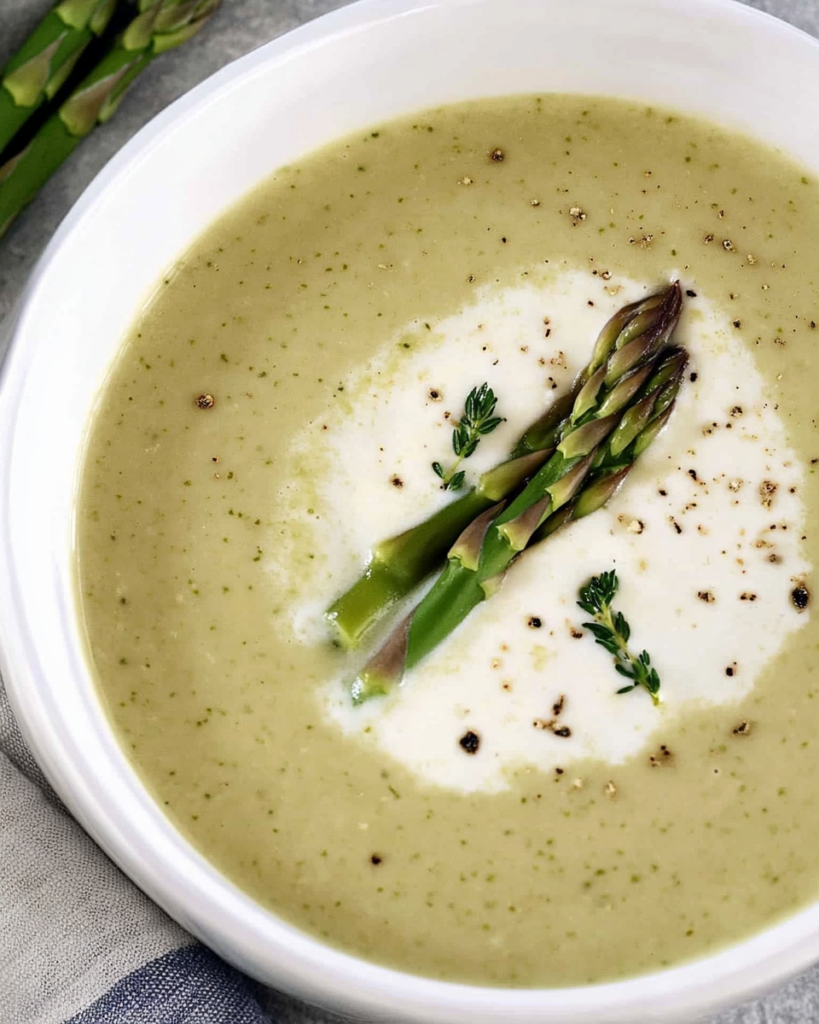
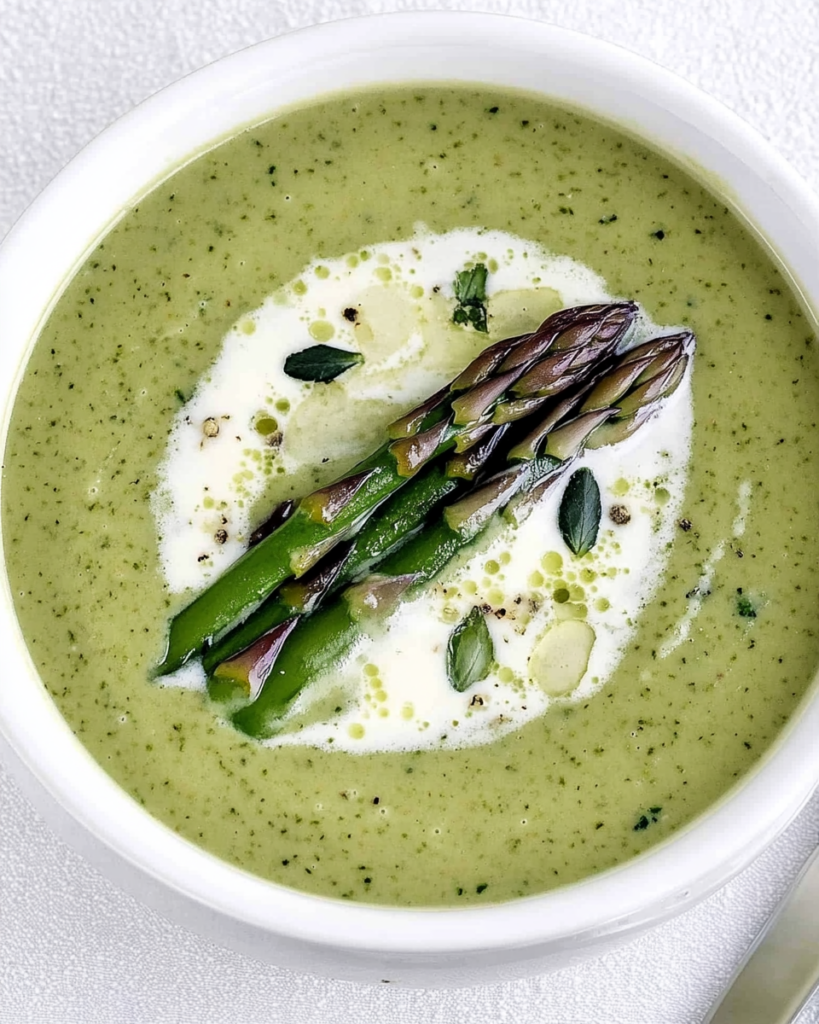
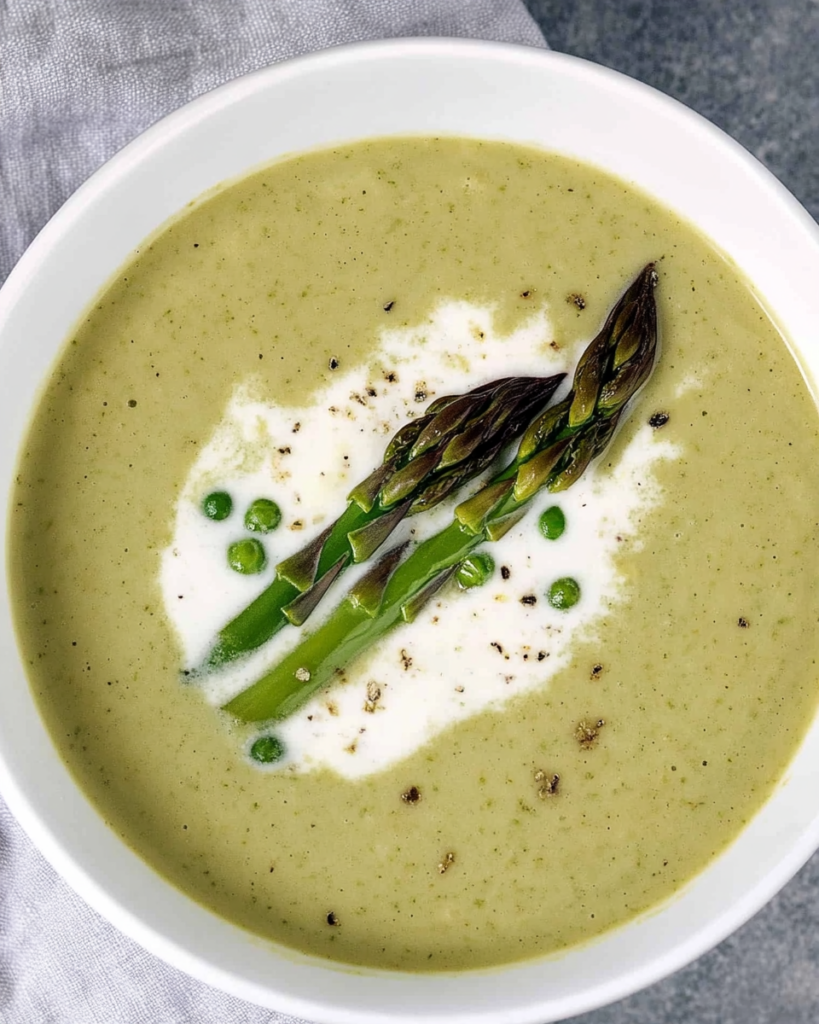
- Garnish with reserved asparagus tips, a drizzle of heavy cream, and fresh thyme.
- Serve warm with crusty bread or a light salad.
Serving Suggestions
1. Crusty Bread
A slice of toasted sourdough, baguette, or ciabatta provides the perfect contrast to the creamy texture of the soup. Lightly buttered and toasted, it adds a satisfying crunch.
2. Grilled Cheese Sandwich
Pairing this soup with a grilled cheese sandwich makes for a classic and comforting combination. A sharp cheddar or gruyère sandwich adds richness and depth.
3. Roasted Vegetables
Oven-roasted carrots, Brussels sprouts, or bell peppers bring sweetness and a slightly caramelized flavor that complements the freshness of the asparagus.
4. Arugula Salad
A simple arugula salad with lemon vinaigrette balances the richness of the soup. Adding Parmesan shavings, cherry tomatoes, or toasted nuts makes it even more flavorful.
5. Quiche or Savory Tart
A spinach and feta quiche or a mushroom and goat cheese tart pairs beautifully with the delicate flavors of the soup, creating a well-rounded meal.
6. Poached or Soft-Boiled Eggs
Adding a soft-boiled or poached egg on top of the soup or on a slice of toasted bread introduces an extra layer of creaminess and protein.
7. Smoked Salmon or Prosciutto
For a touch of elegance, serve the soup with a side of thinly sliced smoked salmon or prosciutto. The salty, savory notes contrast beautifully with the smooth, mild flavors of the soup.
8. White Wine Pairing
A crisp Sauvignon Blanc, Pinot Grigio, or Chardonnay enhances the herbal and citrus notes in the soup. Choose a dry white wine with bright acidity to complement the creaminess.
Common Mistakes to Avoid
1. Overcooking the Asparagus
Asparagus is delicate and can turn bitter if overcooked. Simmer just until tender, about 15 minutes, to preserve its fresh, bright flavor. Overcooked asparagus can also lead to a dull, murky green color.
2. Not Blending the Soup Smoothly
For the best creamy texture, blend the soup thoroughly. If using a stand blender, blend in batches to prevent splattering. An immersion blender works well but may require extra time to achieve a perfectly smooth consistency.
3. Skipping the Lemon Juice
Lemon juice enhances the fresh, slightly sweet flavor of asparagus and balances the richness of the cream. Without it, the soup may taste too heavy. Always add it after blending to maintain its bright flavor.
4. Using Too Much Salt
Since broth already contains sodium, be mindful when seasoning. Taste the soup after blending, then adjust the seasoning gradually to avoid oversalting.
5. Adding Cream Too Soon
Heavy cream should be added after blending and just before serving. If added too early or boiled, it can separate and create an undesirable texture. Gently simmer after adding the cream to allow the flavors to meld.
6. Skipping the Garnishes
Garnishes like reserved asparagus tips, fresh thyme, or a drizzle of cream add texture and visual appeal. A simple topping enhances the presentation and final flavor of the dish.
7. Serving the Soup Too Hot
Cream-based soups are best enjoyed warm, not boiling hot. Extremely high temperatures can cause the flavors to become muted. Let the soup cool slightly before serving to bring out its depth of flavor.
8. Storing and Reheating Improperly
When storing leftovers, cool the soup completely before refrigerating in an airtight container. Reheat gently over low heat, stirring frequently, to prevent separation. If the soup thickens too much, add a splash of broth or cream to restore its smooth consistency.
Recipe Tips for the Best Cream of Asparagus Soup
1. Use Fresh Asparagus for the Best Flavor
Fresh asparagus provides the best texture and taste. Look for firm stalks with tightly closed tips. If the stalks are limp or the tips appear mushy, the asparagus is past its prime.
2. Choose the Right Broth
For a lighter, more delicate flavor, use vegetable broth. If you prefer a slightly richer taste, chicken broth works well. Low-sodium broth allows better control over seasoning.
3. Blend Until Completely Smooth
A high-speed blender creates the smoothest texture. If using an immersion blender, take extra time to ensure there are no fibrous pieces left in the soup. Straining the soup through a fine-mesh sieve can also help achieve a velvety consistency.
4. Adjust the Thickness as Needed
If the soup is too thick, add a small amount of broth or cream to loosen the texture. If it is too thin, let it simmer for a few extra minutes to reduce and thicken.
5. Season Gradually
Start with a small amount of salt and pepper, then taste and adjust. Broth can already contain salt, so it’s best to season carefully.
6. Avoid Overheating the Cream
Heavy cream should be added at the end and warmed gently. Boiling can cause it to separate, leading to an undesirable texture.
Storage and Reheating Instructions
How to Store
- Refrigeration: Let the soup cool completely before transferring it to an airtight container. Store in the refrigerator for up to 4 days.
- Freezing: If you plan to freeze the soup, do so before adding the cream. Dairy-based soups can separate when frozen, resulting in a grainy texture. Freeze in airtight containers for up to 3 months.
How to Reheat
- On the Stovetop: Warm over low heat, stirring occasionally. If the soup is too thick, add a small amount of broth or cream to adjust the consistency.
- In the Microwave: Heat in 30-second intervals, stirring between each, until warmed through.
- If Frozen: Thaw overnight in the refrigerator before reheating on the stovetop. If needed, blend again to restore smoothness.
Frequently Asked Questions (FAQs)
1. Can I Make This Soup Dairy-Free?
Yes. Replace heavy cream with full-fat coconut milk, cashew cream, or oat milk. This keeps the soup creamy while making it dairy-free.
2. Can I Use Frozen Asparagus?
Fresh asparagus provides the best flavor, but frozen asparagus can be used. Let it thaw and drain excess water before cooking to prevent a watery texture.
3. How Can I Make the Soup Thicker?
For a thicker consistency, add a small boiled potato while blending or let the soup simmer longer to reduce.
4. Can I Serve This Soup Cold?
Yes. When chilled, this soup works well as a cold asparagus vichyssoise. Serve with a drizzle of olive oil and fresh herbs.
5. What Other Herbs Can I Use Instead of Thyme?
Fresh basil, dill, or parsley make great alternatives. Each brings a slightly different flavor profile while complementing the asparagus.
6. Can I Add Protein to This Soup?
Yes. Stir in shredded chicken, crispy pancetta, or cooked white beans for added protein. These additions make the soup more filling.
7. Why Is My Soup Bitter?
Overcooking asparagus or using woody stalks can cause bitterness. To avoid this, trim the ends properly and cook just until tender. Adding a touch of lemon juice helps balance any bitterness.
8. How Can I Make This Soup Vegan?
To make the soup vegan, use vegetable broth and coconut milk instead of cream and butter. For extra creaminess, blend in soaked cashews.
Conclusion
This Cream of Asparagus Soup is a simple yet elegant dish that highlights the natural flavors of asparagus. Whether served warm or cold, as a starter or a main course, it’s a versatile soup that fits any occasion. With the right preparation, storage, and reheating techniques, this soup remains fresh, flavorful, and creamy every time.
Cream of Asparagus Soup
Ingredients
- 1 pound fresh asparagus woody ends trimmed
- 3 cups vegetable broth or chicken broth if not vegetarian
- ¾ cup heavy cream
- ⅓ cup yellow onion diced
- 3 cloves garlic minced
- 3 tablespoons butter
- 1 teaspoon fresh lemon thyme or regular thyme
- 1 teaspoon fresh lemon juice
- 1 teaspoon salt
- ½ teaspoon ground black pepper
Instructions
Prepare the Asparagus:
- Wash, dry, and chop the asparagus into small pieces. Reserve a few tips for garnish.
Sauté the Aromatics:
- Heat a pot or Dutch oven over medium heat and melt the butter.
- Add the onions, chopped asparagus, salt, and pepper, and sauté for 3-4 minutes until softened.
- Stir in the garlic and cook for another 10-15 seconds, being careful not to brown it.
Simmer the Soup:
- Pour in the broth and stir to combine.
- Bring to a simmer and cook on medium-low heat for 15 minutes with a slightly offset lid.
Blend Until Smooth:
- Carefully transfer the mixture to a blender and puree until smooth.
- Pour the pureed soup back into the pot.
Finish with Cream & Herbs:
- Stir in the heavy cream, lemon juice, and thyme.
- Simmer uncovered for a few minutes until the soup thickens to your desired consistency.
Garnish & Serve:
- Top with the reserved sautéed asparagus tips, fresh thyme, and a drizzle of heavy cream.
- Serve warm and enjoy!