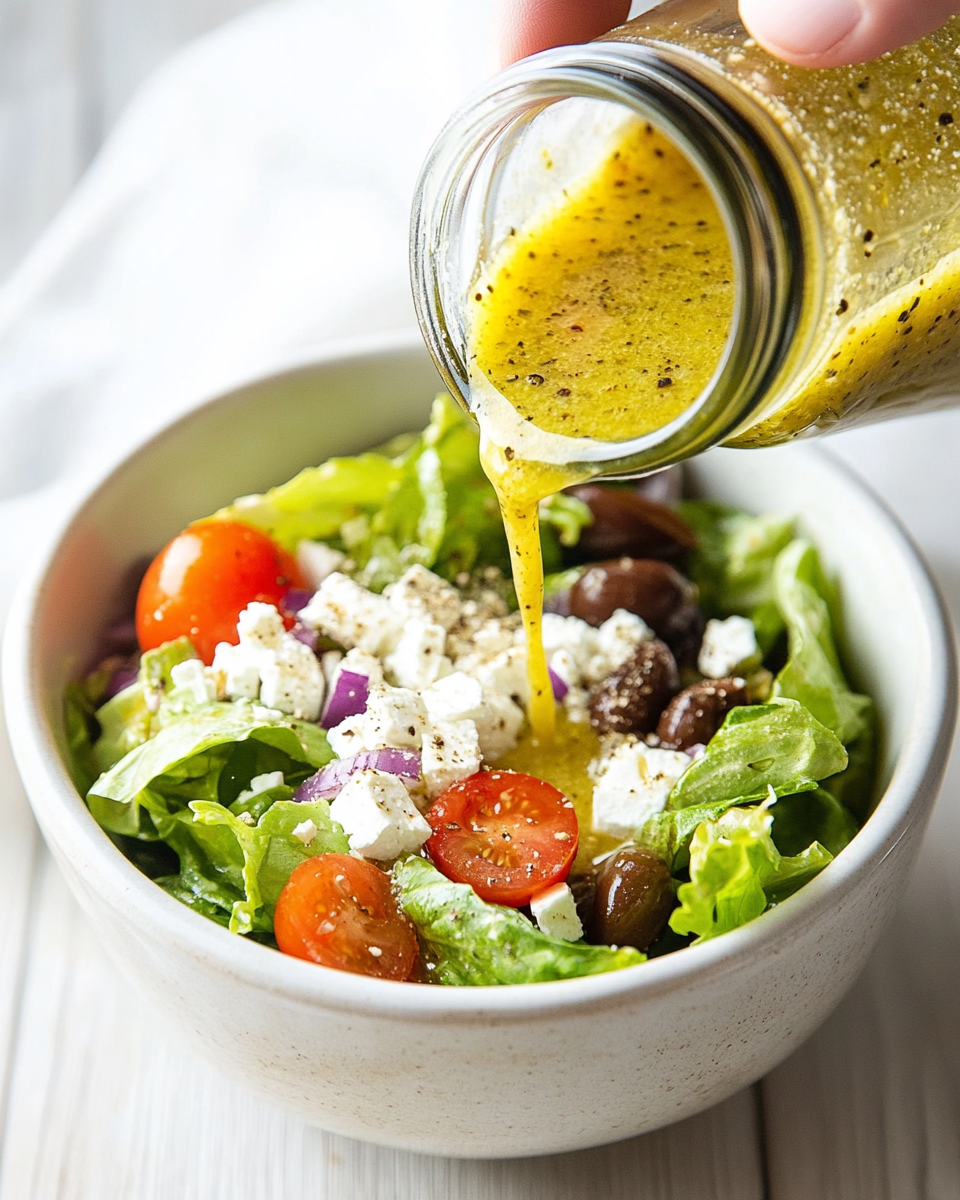
This homemade Greek salad dressing is a simple yet flavorful vinaigrette that brings the essence of Mediterranean cuisine to your table. With a balance of tangy lemon, rich olive oil, garlic, and oregano, this dressing is perfect for Greek salads, marinades, and drizzling over vegetables or grilled meats. It’s an easy, healthier alternative to store-bought dressings, made with just a few pantry staples in under five minutes.
Why You’ll Love This Recipe
- Quick and Easy – Ready in just five minutes with no special equipment required.
- Versatile – Works as a salad dressing, marinade, or sauce for grilled vegetables.
- Authentic Mediterranean Flavor – A classic combination of fresh lemon, olive oil, and herbs.
- Healthier than Store-Bought – No preservatives, artificial flavors, or added sugars.
Preparation Phase & Tools to Use
Making this Greek vinaigrette requires minimal effort, but using the right tools ensures the best consistency and flavor.
Essential Tools and Equipment
- Mason jar with a lid or airtight container – Ideal for mixing and storing.
- Whisk or immersion blender – Helps emulsify the dressing for a smooth texture.
- Garlic press or fine grater – Ensures even distribution of garlic flavor.
- Citrus juicer or reamer – Extracts the most juice from fresh lemons.
Importance of Each Tool
- A jar with a lid allows for easy shaking and storage, preventing spills.
- A whisk or blender helps blend the oil and vinegar for a uniform consistency.
- A garlic press ensures finely minced garlic, which blends seamlessly into the dressing.
- A citrus juicer extracts the maximum amount of juice, enhancing the dressing’s brightness.
Preparation Tips
- Use high-quality extra-virgin olive oil for a richer, smoother taste.
- Shake the dressing well before use, as the ingredients will naturally separate.
- Adjust seasoning to taste—start with a small amount of salt and gradually add more.
- For a stronger oregano flavor, let the dressing sit for at least 15 minutes before serving.
Ingredients
- ¾ cup extra-virgin olive oil – Provides a smooth, rich base.
- Juice and zest of 1 large lemon (about ¼ cup juice) – Adds brightness and acidity.
- ¼ cup red wine vinegar – Enhances the tangy flavor profile.
- 1 teaspoon Dijon mustard – Helps emulsify the dressing for a uniform texture.
- 1 teaspoon dried oregano – A key Mediterranean herb for authentic flavor.
- 1 clove garlic, minced – Adds depth and a slight pungency.
- ¼ cup crumbled feta (optional) – Introduces a creamy, salty element.
- Salt, to taste (about ½ teaspoon) – Enhances the overall balance.
- Freshly cracked black pepper, to taste (about ¼ teaspoon) – Adds mild spice.
Step-by-Step Directions
1. Combine Ingredients
In a mason jar or small mixing bowl, add the olive oil, lemon juice, lemon zest, red wine vinegar, Dijon mustard, oregano, and minced garlic.
2. Mix and Emulsify
- If using a jar with a lid, secure the lid tightly and shake vigorously for 30 seconds.
- If using a whisk, mix briskly in a bowl until the dressing appears smooth and well blended.
3. Add Feta (Optional)
If using, add the crumbled feta to the dressing and shake or stir gently to distribute evenly.
4. Season to Taste
Taste the dressing and adjust salt and black pepper according to your preference.
5. Serve or Store
- Use immediately, or store in an airtight container in the refrigerator for up to 3 weeks.
- Shake well before each use, as the ingredients may separate over time.
How to Serve Greek Salad Dressing
1. Classic Greek Salad
The most traditional way to enjoy this dressing is over a classic Greek salad. Combine chopped cucumbers, tomatoes, red onions, Kalamata olives, and feta cheese, then drizzle the dressing generously over the top. Toss to coat and let the flavors meld for a few minutes before serving.
2. Marinade for Chicken, Fish, or Shrimp
The lemon juice, olive oil, and garlic in this dressing make it an excellent marinade. Coat chicken breasts, shrimp, or white fish and let them marinate for at least 30 minutes before grilling, roasting, or pan-searing.
3. Drizzle for Roasted Vegetables
Use this dressing as a finishing touch on roasted bell peppers, zucchini, eggplant, or asparagus. The acidity enhances the natural sweetness of the vegetables, while the olive oil gives them a silky texture.
4. Grain or Pasta Salads
Toss the dressing with cooked quinoa, couscous, or orzo along with fresh herbs, cherry tomatoes, and feta for a Mediterranean-inspired side dish.
5. Dip for Bread or Pita
Serve it as a dip for warm pita bread, focaccia, or crusty baguette. The rich olive oil and tangy vinegar create a perfect balance of flavors.
6. Dressing for Wraps and Sandwiches
Use it as a light spread for wraps or sandwiches, particularly those with grilled chicken, roasted vegetables, or hummus.
7. Drizzle for Roasted Potatoes
Roasted potatoes or crispy Greek-style potatoes pair beautifully with this dressing. Toss them in a small amount after baking for an extra burst of flavor.
8. Sauce for Grilled Meats
Drizzle over grilled lamb, steak, or pork chops for a Mediterranean twist. The acidity of the dressing cuts through the richness of the meat, enhancing its flavor.
Common Mistakes to Avoid & How to Perfect the Recipe
1. Using Low-Quality Olive Oil
Mistake: Choosing low-grade or heavily processed olive oil can result in a bland or bitter dressing.
Solution: Always use extra-virgin olive oil for the best flavor and nutritional benefits.
2. Skipping the Emulsification Step
Mistake: Simply stirring the ingredients can cause them to separate quickly.
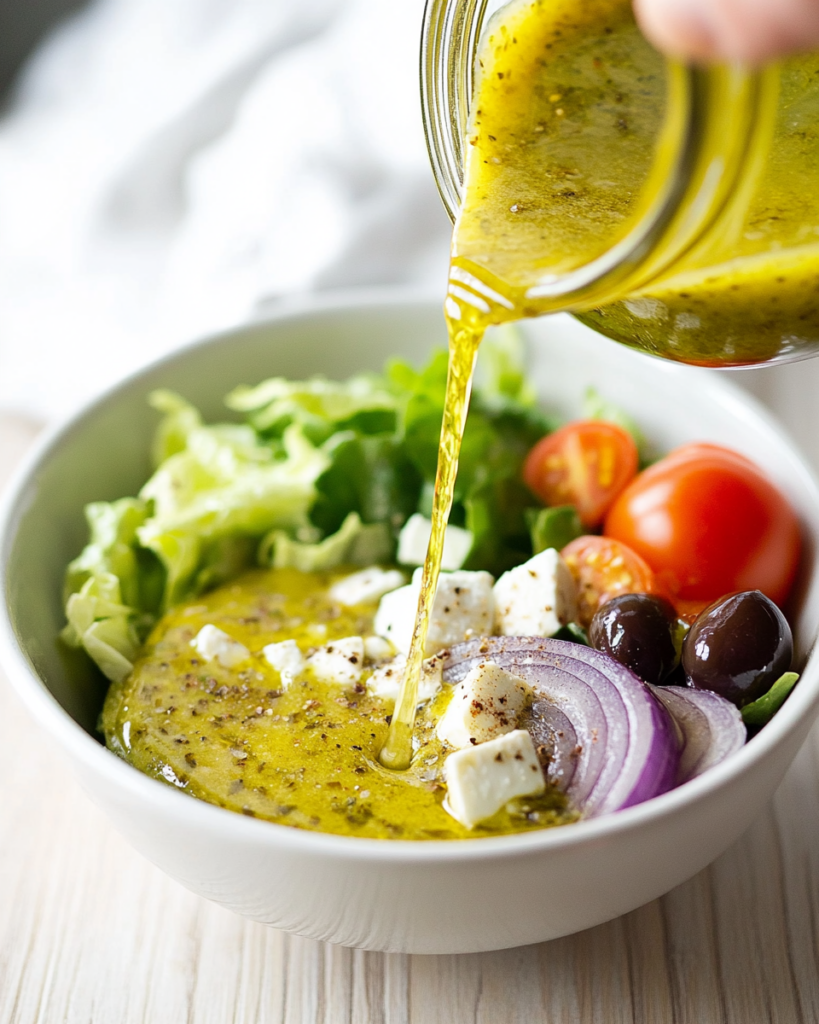
Solution: Shake vigorously in a jar or whisk well to fully emulsify the dressing. Adding Dijon mustard helps stabilize the mixture.
3. Overpowering with Garlic
Mistake: Too much raw garlic can overwhelm the dressing, making it overly sharp.
Solution: Stick to one small clove, or use roasted garlic for a milder flavor.
4. Not Adjusting the Seasoning
Mistake: The dressing may taste too tart or too mild if the seasoning isn’t balanced properly.
Solution: Taste the dressing before serving and adjust salt, pepper, or vinegar as needed. A pinch of sugar or honey can help balance excessive acidity.
5. Storing Improperly
Mistake: Keeping the dressing in an open container can cause it to lose freshness.
Solution: Store in an airtight jar in the refrigerator and shake before each use.
6. Forgetting to Let It Sit
Mistake: Using the dressing immediately doesn’t allow the flavors to develop.
Solution: Let the dressing sit for at least 10–15 minutes before serving for the best flavor.
Best Tips for Making Greek Salad Dressing
1. Use Fresh Ingredients
- Fresh lemon juice and zest provide the brightest flavor. Bottled lemon juice lacks the same freshness.
- Minced fresh garlic gives a stronger taste, but for a milder version, use roasted garlic.
2. Shake or Blend for Better Emulsification
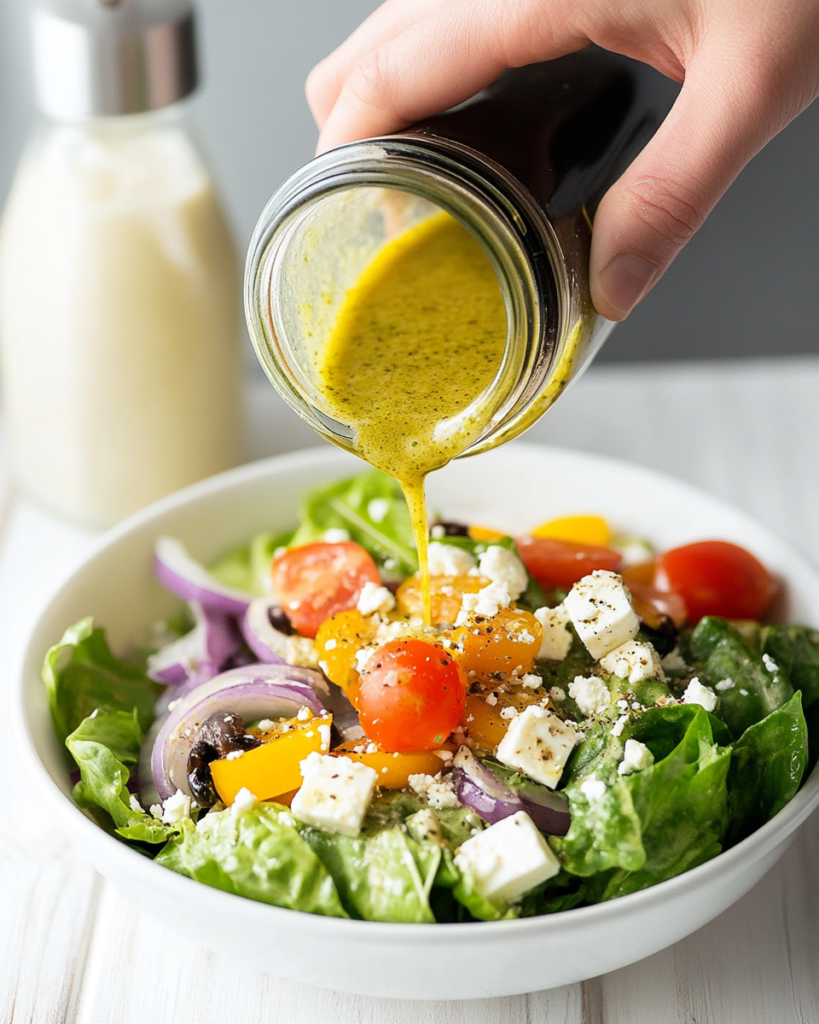
- For a smooth and well-mixed dressing, shake it in a mason jar or whisk it thoroughly.
- If you prefer a thicker consistency, blend the dressing using an immersion blender.
3. Adjust to Taste
- If the dressing is too tangy, add a teaspoon of honey or maple syrup to balance the acidity.
- If it’s too thick, add a tablespoon of water to thin it out.
- If it lacks depth, add a dash more salt, black pepper, or oregano.
4. Let It Sit Before Serving
- Allowing the dressing to sit for 10–15 minutes helps the flavors blend together.
- If possible, make it a few hours ahead and refrigerate to let the ingredients fully develop.
Storage and Reheating Instructions
How to Store Greek Salad Dressing
Proper storage is essential to maintain freshness and flavor.
- Store in a mason jar or airtight container in the refrigerator.
- The dressing stays fresh for up to 3 weeks.
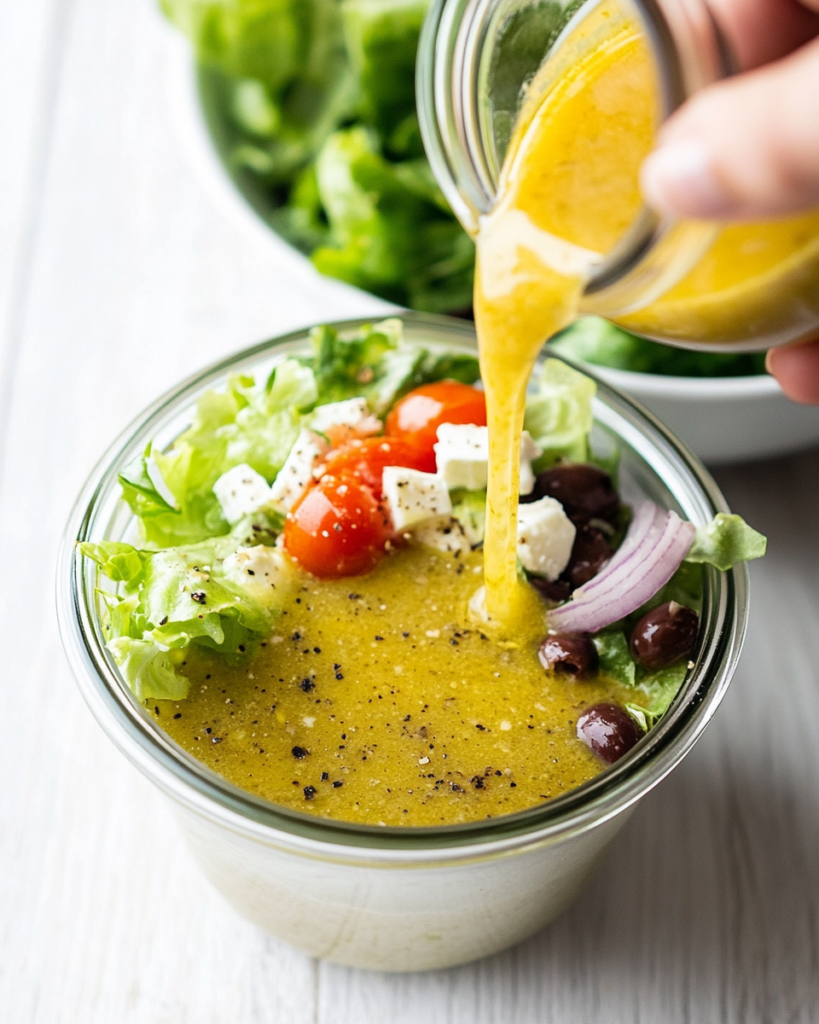
- Shake well before each use, as the oil and vinegar will naturally separate.
How to Bring It Back to Room Temperature
- Olive oil may solidify in the refrigerator, especially if stored for several days.
- Let the dressing sit at room temperature for 10–15 minutes before using.
- To speed up the process, place the jar in a bowl of warm water for a few minutes or microwave it for 5–10 seconds, then shake well.
Frequently Asked Questions
1. Can I make this dressing without mustard?
Yes. Dijon mustard helps emulsify the dressing, but you can leave it out or replace it with a teaspoon of honey for a slight sweetness.
2. How can I make a creamy Greek dressing?
For a thicker and creamier version, blend in 2 tablespoons of Greek yogurt or mayonnaise.
3. What is the best olive oil to use?
Use extra-virgin olive oil, preferably cold-pressed and high-quality, for the best flavor and health benefits.
4. Can I substitute red wine vinegar?
Yes. While red wine vinegar is traditional, you can use balsamic vinegar for a slightly sweeter taste or apple cider vinegar for a milder acidity.
5. Can I use fresh oregano instead of dried?
Yes. Use 1 tablespoon of fresh oregano instead of 1 teaspoon of dried oregano for a fresher, brighter taste.
6. Is this dressing keto-friendly?
Yes. This dressing contains healthy fats and no added sugars, making it suitable for a keto or low-carb diet.
7. Can I freeze Greek salad dressing?
Freezing is not recommended, as the olive oil and vinegar may separate, affecting the texture. It is best stored in the refrigerator.
8. How can I make the dressing less acidic?
Add a teaspoon of honey or maple syrup to balance the acidity, or increase the olive oil ratio slightly.
Final Thoughts
This homemade Greek salad dressing is a simple and flavorful way to elevate your salads, marinades, and grilled dishes. With fresh, high-quality ingredients, proper storage, and a few adjustments to suit your taste, you can enjoy a restaurant-quality dressing at home. Ditch store-bought versions and enjoy this easy, authentic, and healthier alternative any time.

Best Greek Salad Dressing
Ingredients
- ¾ cup extra-virgin olive oil
- Juice and zest of 1 large lemon about ¼ cup juice
- ¼ cup red wine vinegar
- 1 teaspoon Dijon mustard
- 1 teaspoon dried oregano
- 1 clove garlic minced
- ¼ cup crumbled feta optional
- Salt to taste (about ½ teaspoon)
- Freshly cracked black pepper to taste (about ¼ teaspoon)
Instructions
- In a pint jar (or any jar with a tight-fitting lid), combine the olive oil, lemon juice, lemon zest, red wine vinegar, Dijon mustard, oregano, and minced garlic.
- Cover the jar and shake well until the dressing is fully emulsified.
- If using, add the crumbled feta to the jar, then shake again to distribute evenly.
- Taste the dressing and season with salt and freshly cracked black pepper, adjusting to your preference.
- Use immediately or store in the refrigerator for up to 3 weeks.