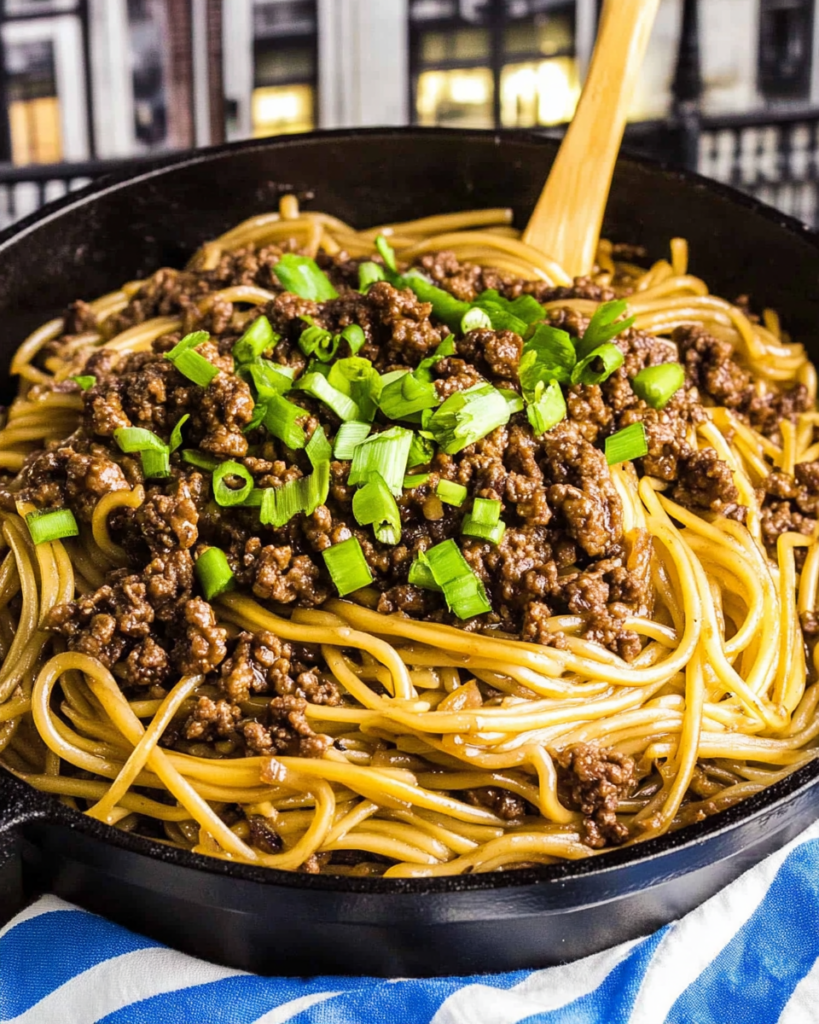
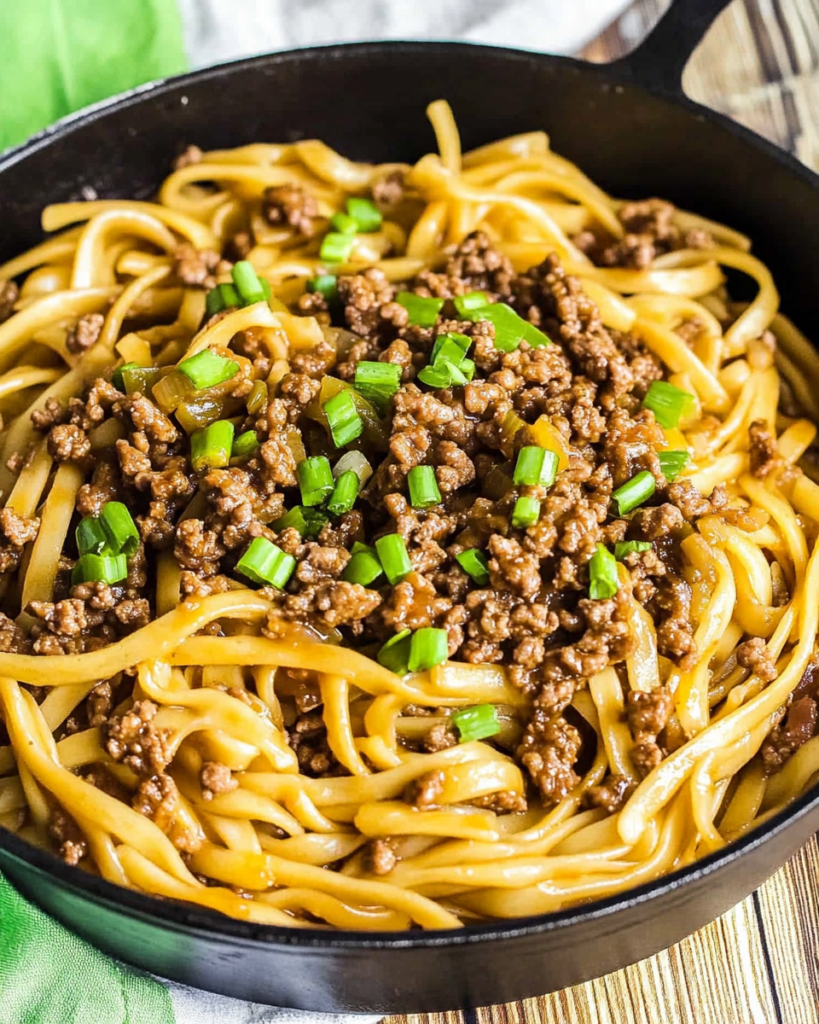
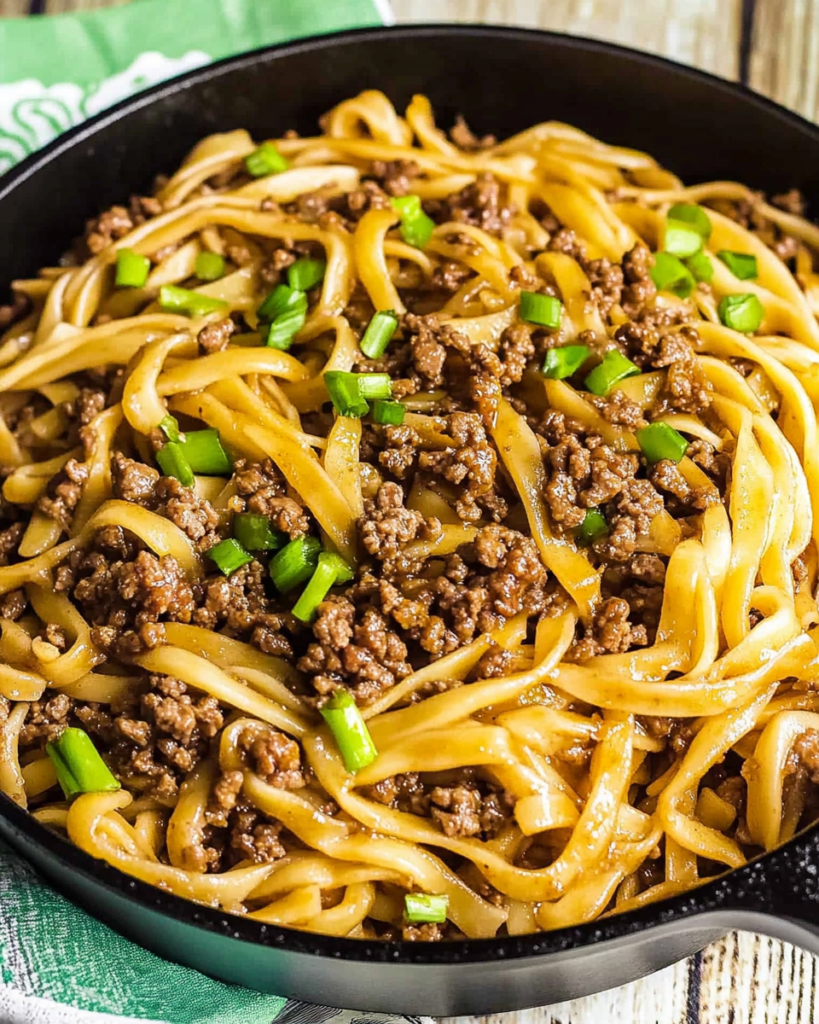
Ground Beef Mongolian Noodles is a quick and flavorful dish that combines tender noodles, savory ground beef, and a rich, sweet, and slightly spicy sauce. With hints of garlic, ginger, and hoisin, this dish delivers bold flavors that make it taste like your favorite takeout but with the freshness of a home-cooked meal.
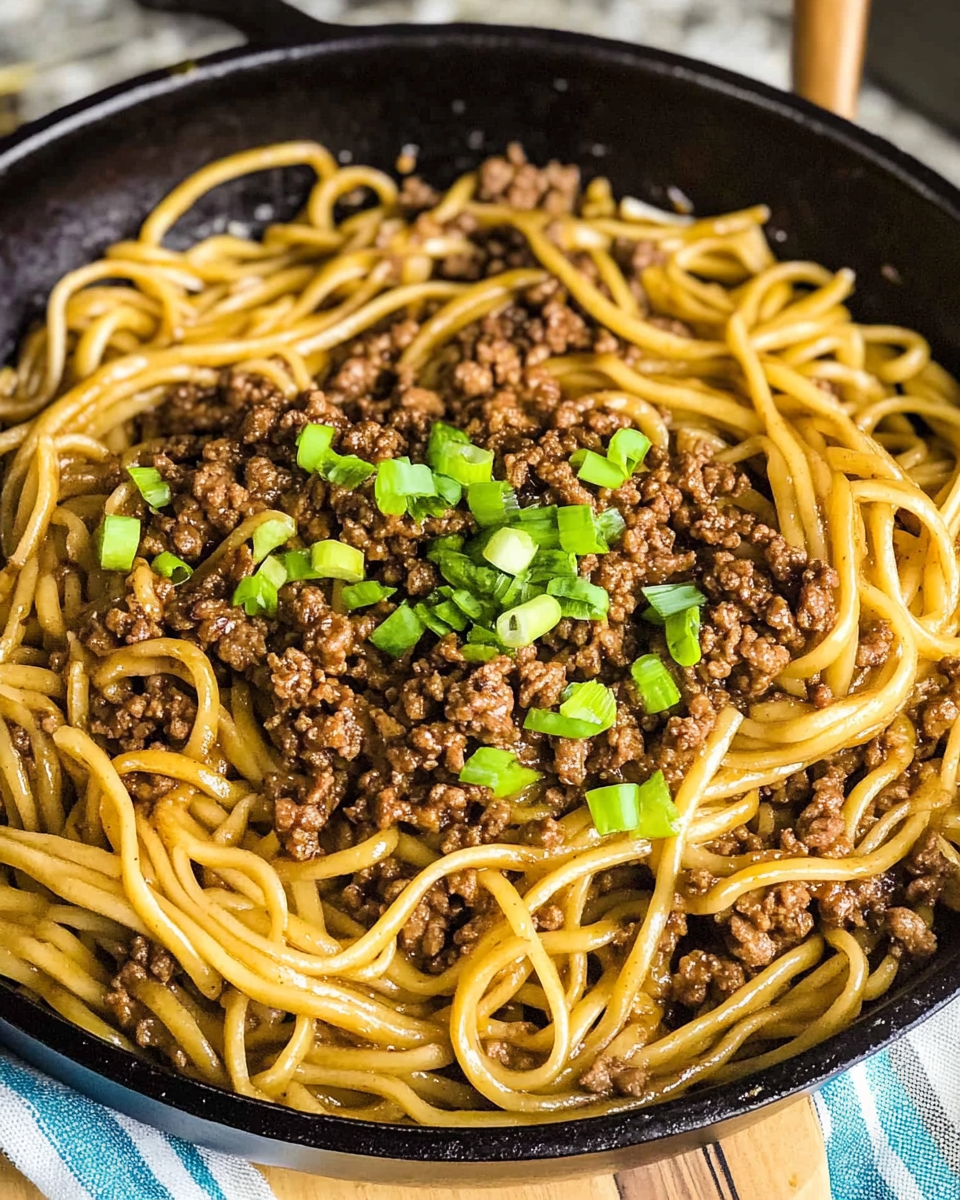
Perfect for busy weeknights, this recipe comes together in just 30 minutes using simple pantry staples. The combination of umami-rich soy sauce, slightly caramelized brown sugar, and the heat from red pepper flakes creates a perfectly balanced sauce that coats the noodles beautifully.
Whether you’re looking for a satisfying comfort meal or an easy dinner idea that the whole family will love, this Mongolian-inspired beef noodle dish is a must-try. It’s also highly customizable—add vegetables, adjust the spice level, or swap the protein to suit your preference.
Why You’ll Love This Recipe
- Quick and Easy – Ready in just 30 minutes with minimal prep.
- Budget-Friendly – Uses affordable and accessible ingredients.
- Better Than Takeout – Homemade means fresher, healthier, and fully customizable.
- Customizable – Add veggies, adjust the spice, or use different noodles.
- Great for Meal Prep – Stores well for leftovers and reheats easily.
Preparation & Tools Needed
Before getting started, ensure you have the right tools to make cooking smooth and efficient.
Essential Kitchen Tools
- Large Skillet or Wok – Needed for browning the beef and mixing the sauce.
- Large Pot – For cooking the noodles.
- Tongs or a Spatula – Helps evenly mix the noodles with the sauce.
- Cutting Board & Knife – For mincing garlic, ginger, and slicing green onions.
- Small Mixing Bowl – To prepare the cornstarch slurry.
Having everything ready before you start cooking makes the process much easier and ensures you don’t overcook any ingredients.
Ingredients List
For the Sauce:
- ½ cup low-sodium soy sauce
- ½ cup beef broth
- ½ cup brown sugar (reduce to ⅓ or ¼ cup for less sweetness)
- 4 tablespoons hoisin sauce (low-sodium, if available)
- ½ teaspoon black pepper
- ½ teaspoon red pepper flakes (optional, for spice)
For the Noodles & Beef:
- 10 ounces noodles (linguine, fettuccine, or spaghetti)
- 1 pound lean ground beef
- 4 teaspoons fresh ginger, minced
- 6 cloves garlic, minced
- 1 tablespoon cornstarch
- 2 tablespoons water
For Garnish:
- 4 medium green onions, sliced
Step-by-Step Instructions
1. Cook the Ground Beef
- Heat a large skillet over medium heat.
- Add ground beef and cook until browned, breaking it up into crumbles as it cooks.
- During the last 2 minutes, add minced ginger and garlic. Stir well to combine.
2. Cook the Pasta
- While the beef is cooking, prepare the noodles according to package instructions.
- Do not salt the water, as the sauce is already well-seasoned.
- Drain the noodles and set aside.
3. Make the Sauce
- Drain any excess grease from the beef and return it to the skillet.
- Stir in the soy sauce, beef broth, brown sugar, hoisin sauce, black pepper, and red pepper flakes (if using).
4. Thicken the Sauce
- In a small bowl, mix cornstarch and water to create a slurry.
- Pour the slurry into the skillet and stir well.
- Bring the mixture to a low boil and let it cook until the sauce thickens slightly.
5. Combine the Noodles and Sauce
- Add the cooked noodles to the skillet and toss well to coat them in the sauce.
- Let the noodles sit for a few minutes to absorb the flavors.
6. Garnish and Serve
- Sprinkle with sliced green onions for a fresh touch.
- Serve hot and enjoy.
Recipe Tips & Variations
- Adjust the Sweetness – Reduce the brown sugar if you prefer a less sweet sauce.
- Make it Spicy – Add extra red pepper flakes or drizzle with sriracha.
- Add Vegetables – Toss in broccoli, bell peppers, carrots, or snap peas for added texture.
- Try a Different Protein – Swap ground beef for chicken, turkey, or even tofu.
- Use Different Noodles – Rice noodles, ramen, or egg noodles all work well in this dish.
Serving Suggestions
A well-rounded meal includes a balance of flavors and textures. Here are eight great side dishes that pair well with these noodles.
1. Garlic Green Beans
Crisp green beans sautéed with garlic and a touch of soy sauce add a fresh contrast to the rich, saucy noodles. The slight crunch complements the soft texture of the pasta.
2. Steamed Broccoli
Broccoli is a great option to add fiber and color to your meal. The mild, slightly bitter taste helps cut through the sweetness of the sauce, making each bite more balanced.
3. Crispy Egg Rolls
Egg rolls bring a satisfying crunch and an extra burst of flavor. Their savory filling pairs well with the Mongolian-style sauce, creating a restaurant-quality meal at home.
4. Asian Cucumber Salad
A chilled cucumber salad with rice vinegar, sesame oil, and red pepper flakes provides a refreshing contrast. The tangy and slightly spicy flavors cleanse the palate between bites.
5. Fried Rice
If you’re serving a crowd or want a heartier meal, fried rice with egg, peas, and carrots makes a great companion dish. It soaks up any extra sauce and adds variety to the plate.
6. Miso Soup
A light bowl of miso soup with tofu and seaweed provides a warm, comforting element that enhances the overall meal experience.
7. Spicy Edamame
Steamed edamame tossed with chili flakes and garlic adds protein and a spicy kick. It’s a great appetizer that keeps the meal exciting without overpowering the noodles.
8. Kimchi
For those who love bold flavors, kimchi brings a spicy, tangy crunch that cuts through the richness of the dish. It also adds probiotics and health benefits.
Common Mistakes to Avoid
Even simple recipes can go wrong with a few missteps. Here’s how to avoid common pitfalls when making Ground Beef Mongolian Noodles.
1. Overcooking the Noodles
If the noodles are overcooked, they can become mushy when mixed with the sauce. Cook them just until al dente, as they will continue to absorb liquid after being combined with the beef mixture.
2. Using Too Much Sugar
While brown sugar adds depth to the sauce, too much can make it overly sweet. Start with a smaller amount and adjust to taste before serving.
3. Skipping the Cornstarch Slurry
The cornstarch slurry thickens the sauce, helping it cling to the noodles. Without it, the sauce may be too thin and pool at the bottom of the dish instead of evenly coating each bite.
4. Not Draining Excess Fat
If using higher-fat ground beef, be sure to drain the excess grease before adding the sauce. Too much fat can make the dish heavy and oily.
5. Overcrowding the Skillet
Cooking everything in an overcrowded pan can lead to uneven cooking and steaming instead of browning. Use a large skillet or wok to allow proper heat distribution.
6. Forgetting to Taste and Adjust
Flavors can vary based on the brand of soy sauce, hoisin, or broth used. Always taste the sauce before adding the noodles to ensure the right balance of sweetness, saltiness, and spice.
7. Not Letting the Flavors Develop
Once everything is combined, letting the noodles sit for a few minutes helps them absorb the sauce fully. This extra step enhances the depth of flavor.
Perfecting the Recipe
How to Customize the Dish
Make It Healthier
- Swap regular noodles for whole wheat, zucchini noodles, or brown rice noodles.
- Use low-sodium soy sauce and hoisin sauce to control salt levels.
- Add more vegetables like bell peppers, carrots, or mushrooms for extra nutrients.
Add More Protein
- Try this recipe with ground turkey, chicken, or pork for a different flavor.
- For a vegetarian option, use tofu or plant-based ground meat.
Enhance the Flavor
- Add a splash of rice vinegar or lime juice for a slight tang.
- Sprinkle sesame seeds for extra texture and nuttiness.
- Use sriracha or chili paste if you want a spicier kick.
Make It Extra Saucy
If you like more sauce, increase the beef broth and soy sauce while keeping the cornstarch slurry proportionate. This ensures a good balance without making the dish too salty.
With these serving ideas, tips, and customizations, your Ground Beef Mongolian Noodles will always turn out perfect. Whether you’re keeping it simple or making adjustments to suit your taste, this dish is versatile, satisfying, and full of bold flavors.
Serving Suggestions
A well-rounded meal includes a balance of flavors and textures. Here are eight great side dishes that pair well with these noodles.
1. Garlic Green Beans
Crisp green beans sautéed with garlic and a touch of soy sauce add a fresh contrast to the rich, saucy noodles. The slight crunch complements the soft texture of the pasta.
2. Steamed Broccoli
Broccoli is a great option to add fiber and color to your meal. The mild, slightly bitter taste helps cut through the sweetness of the sauce, making each bite more balanced.
3. Crispy Egg Rolls
Egg rolls bring a satisfying crunch and an extra burst of flavor. Their savory filling pairs well with the Mongolian-style sauce, creating a restaurant-quality meal at home.
4. Asian Cucumber Salad
A chilled cucumber salad with rice vinegar, sesame oil, and red pepper flakes provides a refreshing contrast. The tangy and slightly spicy flavors cleanse the palate between bites.
5. Fried Rice
If you’re serving a crowd or want a heartier meal, fried rice with egg, peas, and carrots makes a great companion dish. It soaks up any extra sauce and adds variety to the plate.
6. Miso Soup
A light bowl of miso soup with tofu and seaweed provides a warm, comforting element that enhances the overall meal experience.
7. Spicy Edamame
Steamed edamame tossed with chili flakes and garlic adds protein and a spicy kick. It’s a great appetizer that keeps the meal exciting without overpowering the noodles.
8. Kimchi
For those who love bold flavors, kimchi brings a spicy, tangy crunch that cuts through the richness of the dish. It also adds probiotics and health benefits.
Common Mistakes to Avoid
Even simple recipes can go wrong with a few missteps. Here’s how to avoid common pitfalls when making Ground Beef Mongolian Noodles.
1. Overcooking the Noodles
If the noodles are overcooked, they can become mushy when mixed with the sauce. Cook them just until al dente, as they will continue to absorb liquid after being combined with the beef mixture.
2. Using Too Much Sugar
While brown sugar adds depth to the sauce, too much can make it overly sweet. Start with a smaller amount and adjust to taste before serving.
3. Skipping the Cornstarch Slurry
The cornstarch slurry thickens the sauce, helping it cling to the noodles. Without it, the sauce may be too thin and pool at the bottom of the dish instead of evenly coating each bite.
4. Not Draining Excess Fat
If using higher-fat ground beef, be sure to drain the excess grease before adding the sauce. Too much fat can make the dish heavy and oily.
5. Overcrowding the Skillet
Cooking everything in an overcrowded pan can lead to uneven cooking and steaming instead of browning. Use a large skillet or wok to allow proper heat distribution.
6. Forgetting to Taste and Adjust
Flavors can vary based on the brand of soy sauce, hoisin, or broth used. Always taste the sauce before adding the noodles to ensure the right balance of sweetness, saltiness, and spice.
7. Not Letting the Flavors Develop
Once everything is combined, letting the noodles sit for a few minutes helps them absorb the sauce fully. This extra step enhances the depth of flavor.
Perfecting the Recipe
How to Customize the Dish
Make It Healthier
- Swap regular noodles for whole wheat, zucchini noodles, or brown rice noodles.
- Use low-sodium soy sauce and hoisin sauce to control salt levels.
- Add more vegetables like bell peppers, carrots, or mushrooms for extra nutrients.
Add More Protein
- Try this recipe with ground turkey, chicken, or pork for a different flavor.
- For a vegetarian option, use tofu or plant-based ground meat.
Enhance the Flavor
- Add a splash of rice vinegar or lime juice for a slight tang.
- Sprinkle sesame seeds for extra texture and nuttiness.
- Use sriracha or chili paste if you want a spicier kick.
Make It Extra Saucy
If you like more sauce, increase the beef broth and soy sauce while keeping the cornstarch slurry proportionate. This ensures a good balance without making the dish too salty.
With these serving ideas, tips, and customizations, your Ground Beef Mongolian Noodles will always turn out perfect. Whether you’re keeping it simple or making adjustments to suit your taste, this dish is versatile, satisfying, and full of bold flavors.
You said:
part 3 between 500 and 700 words no emojis
ChatGPT said:
Recipe Tips, Storage, and FAQs
To make the most of your Ground Beef Mongolian Noodles, knowing how to store, reheat, and customize the dish is essential. Whether you’re meal-prepping or saving leftovers for later, these tips will help maintain the best flavor and texture.
Storage and Reheating Instructions
Refrigerating Leftovers
- Allow the noodles to cool completely before storing.
- Place them in an airtight container and refrigerate for up to 3 days.
- If possible, store the sauce and noodles separately to prevent sogginess.
Freezing the Dish
- Freezing is not ideal because the noodles can become mushy.
- If necessary, freeze only the beef and sauce mixture in an airtight container for up to 2 months.
- When ready to eat, cook fresh noodles and toss them with the reheated sauce.
Reheating Instructions
- Stovetop: Heat a skillet over medium-low heat, adding a splash of water or broth to loosen the sauce. Stir until heated through.
- Microwave: Place in a microwave-safe dish, cover loosely, and heat in 30-second intervals, stirring in between, until warm.
- Avoid Overheating: Overcooked noodles can become mushy, so heat just until warmed through.
Frequently Asked Questions
Can I use a different type of meat?
Yes, you can substitute ground beef with ground chicken, turkey, pork, or even crumbled tofu. Each protein will bring a slightly different texture and flavor to the dish.
What vegetables can I add?
This dish pairs well with broccoli, snap peas, carrots, mushrooms, or bell peppers. For best results, lightly sauté the vegetables before adding them to the sauce.
Can I make this gluten-free?
Yes, use gluten-free soy sauce (tamari) and replace the noodles with rice noodles or another gluten-free option. Ensure that the hoisin sauce is also gluten-free.
How can I make this dish spicier?
Increase the red pepper flakes or add sriracha, chili paste, or fresh sliced jalapeños for extra heat.
Can I use a different type of noodle?
Absolutely. While linguine, fettuccine, or spaghetti work well, you can also try ramen, rice noodles, egg noodles, or udon.
Why is my sauce too thin or too thick?
- If the sauce is too thin, add a little more cornstarch slurry and simmer until thickened.
- If the sauce is too thick, add a small amount of beef broth or water to loosen it.
Can I prepare this dish in advance?
Yes. You can make the sauce and cook the beef ahead of time. Store them in the refrigerator and cook fresh noodles when ready to serve.
Final Thoughts
Ground Beef Mongolian Noodles is a flavorful, quick, and satisfying meal that’s perfect for any night of the week. With a balance of sweet, savory, and spicy flavors, this dish is both easy to make and highly customizable.
By following the storage and reheating tips, you can enjoy leftovers without sacrificing taste or texture. Whether you’re adding vegetables, adjusting the spice level, or trying a different protein, this recipe offers endless possibilities.
With its rich sauce, tender noodles, and bold flavors, this dish is sure to become a staple in your meal rotation. Enjoy it fresh, experiment with variations, and savor every bite.
Ground Beef Mongolian Noodles
Ingredients
For the Sauce:
- ½ cup low-sodium soy sauce
- ½ cup beef broth
- ½ cup brown sugar reduce to ⅓ or ¼ cup for less sweetness
- 4 tablespoons hoisin sauce low-sodium, if available
- ½ teaspoon black pepper
- ½ teaspoon red pepper flakes optional
For the Noodles & Beef:
- 10 ounces noodles linguine, fettuccine, or spaghetti
- 1 pound lean ground beef
- 4 teaspoons fresh ginger minced
- 6 cloves garlic minced
- 1 tablespoon cornstarch
- 2 tablespoons water
- For Garnish:
- 4 medium green onions sliced
Instructions
Cook the Ground Beef
- In a large skillet with high sides, brown the ground beef over medium heat.
- During the last 2 minutes of cooking, add the minced ginger and garlic. Break up the beef into small crumbles as it cooks.
Cook the Pasta
- While the beef is cooking, prepare the pasta according to package instructions.
- Do not salt the pasta water, as the sauce is already salty.
- Drain the pasta and set aside.
Make the Sauce
- Drain any excess fat from the cooked beef and return it to the skillet.
- Stir in the soy sauce, beef broth, brown sugar, hoisin sauce, black pepper, and red pepper flakes (if using).
Thicken the Sauce
- In a small bowl, mix the cornstarch and water to create a slurry.
- Add the slurry to the skillet and stir well.
- Bring the mixture to a low boil and cook until the sauce thickens slightly.
Combine the Noodles and Sauce
- Add the cooked noodles to the beef mixture. Stir to combine, ensuring the noodles are well coated in the sauce.
- Let the noodles sit for a few minutes to absorb the flavors.
Serve
- Garnish with sliced green onions and serve hot. Enjoy!