Lasagna Soup brings all the comforting flavors of traditional lasagna into a warm, hearty bowl of soup. This easy, one-pot meal combines savory ground beef, tender pasta, and rich tomato broth, all finished with a trio of cheeses for a comforting Italian-inspired dinner. Whether you’re craving lasagna without the layering or looking for a new twist on weeknight soup, this dish offers incredible taste with far less effort.
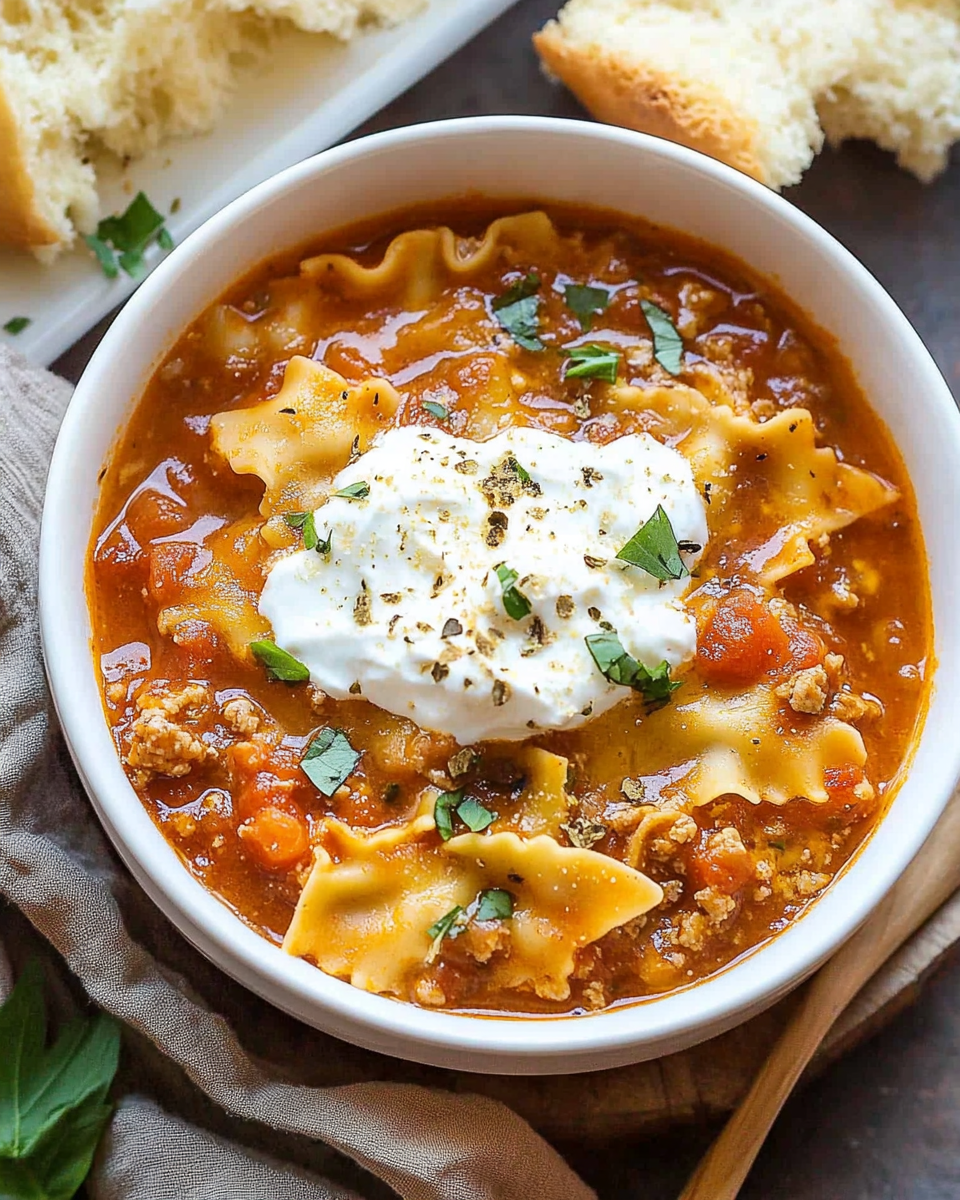
This version of Lasagna Soup delivers classic flavors in just 45 minutes, making it ideal for busy evenings. With perfectly seasoned beef, aromatic garlic and onions, and tangy tomatoes, every spoonful is packed with bold, cozy flavors. A generous topping of ricotta, mozzarella, and Parmesan adds creamy indulgence, perfectly balancing the rich tomato base. If you love traditional lasagna but want to skip the oven, this recipe is a must-try.
Why You’ll Love This Lasagna Soup Recipe
- One-Pot Wonder: Minimal cleanup with maximum flavor.
- Weeknight Friendly: Ready in under an hour.
- Family Favorite: Crowd-pleasing comfort food perfect for kids and adults alike.
- Customizable: Swap beef for sausage, turkey, or make it vegetarian.
- Meal Prep Approved: Freezes well for future meals.
Essential Tools and Equipment
To make Lasagna Soup, you’ll need just a few kitchen basics:
- Large Soup Pot or Dutch Oven – Even heat distribution is essential for simmering.
- Sharp Knife – For dicing onions and mincing garlic.
- Wooden Spoon – Ideal for stirring without scratching the pot.
- Ladle – For easy serving.
- Grater – Freshly grated Parmesan enhances flavor.
Using a heavy-bottomed pot prevents scorching, while a wooden spoon helps you scrape up flavorful browned bits from the bottom of the pot. If you prefer a hands-off approach, this recipe adapts well to both slow cookers and pressure cookers.
Preparation Tips
- Brown the Beef Thoroughly: Browning adds depth to the broth.
- Chop Ingredients Before Starting: Prepping everything ahead ensures smooth cooking.
- Deglaze for Flavor: Scrape up browned bits when adding broth to maximize taste.
- Choose the Right Pasta: Sturdy shapes like bowtie or penne hold up well in soup.
Ingredients List
Soup Base
- 1-2 tablespoons olive oil
- 1 pound ground beef
- 1 large onion, diced
- 4 cloves garlic, minced
- 1 (15-ounce) can diced tomatoes (with juice)
- 1 (15-ounce) can tomato sauce or puree
- 3 ounces tomato paste
- 4 cups chicken broth
- 1-2 cups water (as needed)
- 1 tablespoon Italian seasoning
- 1 teaspoon sea salt (or to taste)
- Black pepper, to taste
- 8 ounces bowtie pasta (or any sturdy pasta)
Toppings
- ½ cup ricotta cheese
- 2 ounces mozzarella cheese, shredded
- ¼ cup Parmesan cheese, grated or shaved
- ¼ cup fresh parsley, chopped
Step-by-Step Directions
1. Sauté the Base
Heat a large soup pot over medium-high heat. Add olive oil. When shimmering, add ground beef, diced onion, and minced garlic. Cook until the beef browns and the onions soften, about 7-9 minutes. Drain excess fat if needed.
2. Build the Broth
Add the diced tomatoes (with juice), tomato sauce, tomato paste, chicken broth, Italian seasoning, salt, and pepper. Stir well, scraping up any browned bits from the pot’s bottom to enhance flavor.
3. Simmer with Pasta
Stir in the uncooked pasta. Bring the soup to a boil, then reduce the heat to medium. Simmer for 10-15 minutes, stirring occasionally, until the pasta reaches your desired texture. Add water if needed to adjust consistency.
4. Serve with Cheese and Garnishes
Ladle the soup into bowls. Top each serving with ricotta, mozzarella, Parmesan, and fresh parsley. Serve immediately with crusty bread or garlic toast if desired.
Tips for Variations
- Meat Options: Substitute ground beef with Italian sausage or ground turkey.
- Vegetarian Version: Omit the meat and add mushrooms, zucchini, or spinach.
How to Serve Lasagna Soup for Maximum Flavor
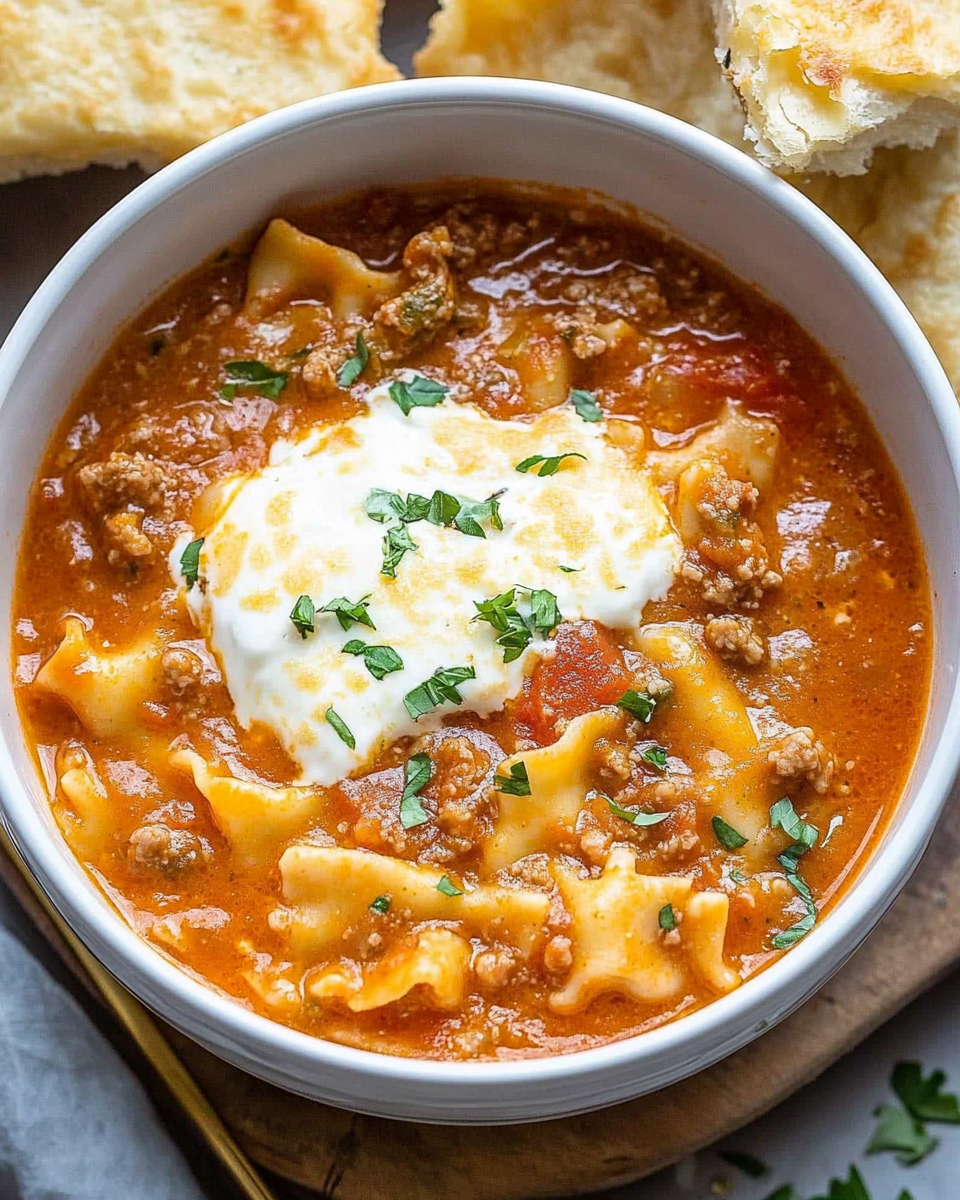
One of the best parts of Lasagna Soup is how customizable and versatile it is when serving. Each bowl can be personalized, making it perfect for family meals where preferences differ. Serve it piping hot with generous spoonfuls of creamy ricotta, gooey mozzarella, and nutty Parmesan. A sprinkle of fresh parsley or basil brightens the rich tomato broth, while a drizzle of olive oil can enhance its rustic appeal.
For a fun, interactive dinner, serve Lasagna Soup with a toppings bar. Set out bowls of cheeses, fresh herbs, and even red pepper flakes so everyone can garnish their own bowl to taste. This approach works particularly well for gatherings, allowing guests to create their perfect bowl.
To elevate your presentation, ladle the soup into wide, shallow bowls to showcase the colorful ingredients. Pair it with a slice of warm garlic bread or crusty artisan bread to soak up the savory broth. For a lighter touch, consider a side salad to balance the heartiness of the soup.
Common Mistakes to Avoid When Making Lasagna Soup
Even though Lasagna Soup is beginner-friendly, a few common pitfalls can affect the final result. By understanding these issues in advance, you can easily avoid them and create a consistently delicious soup.
1. Overcooking the Pasta
Pasta should be tender but not mushy. If you plan to refrigerate leftovers, slightly undercook the pasta to allow for additional softening when reheated.
2. Skipping the Deglaze Step
After browning the meat, the bottom of the pot often collects caramelized bits packed with flavor. Deglazing with broth helps incorporate these into the soup, boosting its depth.
3. Adding Salt Too Early
Canned tomatoes and cheese both contribute saltiness. Taste the soup after it simmers and adjust the salt level at the end.
4. Using the Wrong Pasta
Delicate noodles, like egg noodles or broken lasagna sheets, may break down in the broth. Sturdy options like bowtie, penne, or rotini maintain their texture better.
5. Neglecting Fresh Herbs
Dried herbs build foundational flavor, but fresh parsley or basil at the end provides brightness and balance to the rich broth.
6. Forgetting to Adjust Consistency
Pasta continues to absorb broth after cooking. If reheating, always add a splash of broth or water to restore the desired consistency.
Perfect Side Dishes for Lasagna Soup
Although Lasagna Soup is filling on its own, pairing it with a complementary side dish can round out the meal beautifully. Whether you want something light and refreshing or another comfort food classic, these eight side dishes enhance your soup experience.
1. Garlic Bread
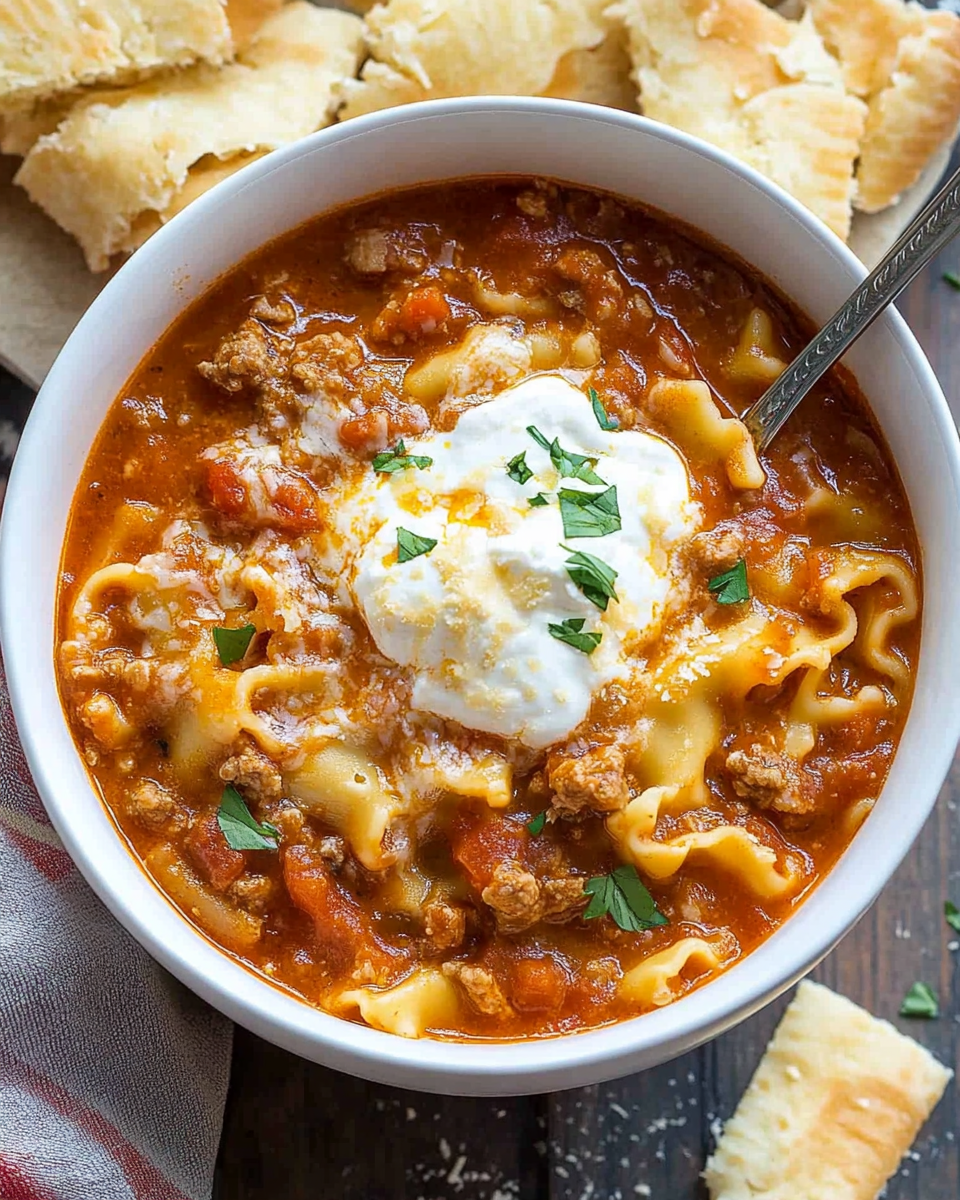
A timeless pairing, warm garlic bread or garlic knots offer the perfect crispy, buttery contrast to the hearty soup. Use them to scoop up every last drop of cheesy tomato broth.
2. Classic Caesar Salad
Crisp romaine, creamy dressing, and crunchy croutons create a fresh counterpoint to the rich soup. Add shaved Parmesan to tie the flavors together.
3. Caprese Salad
Tomatoes, fresh mozzarella, basil, and a drizzle of balsamic glaze provide a light, Italian-inspired side that mirrors the flavors of Lasagna Soup without overwhelming the palate.
4. Antipasto Platter
A spread of cured meats, cheeses, olives, and roasted vegetables offers a variety of textures and flavors, perfect for grazing before or alongside the soup.
5. Roasted Brussels Sprouts
For a warm, savory side, roasted Brussels sprouts with balsamic glaze and Parmesan bring caramelized sweetness that complements the soup’s rich tomato broth.
6. Parmesan Roasted Zucchini
Tender zucchini rounds topped with Parmesan cheese and Italian herbs make an easy vegetable side that bakes in under 20 minutes.
7. Stuffed Mushrooms
Mushrooms stuffed with ricotta, herbs, and breadcrumbs echo the flavors of the soup, creating a cohesive Italian-inspired menu.
8. Ricotta-Stuffed Mini Peppers
Sweet mini peppers filled with herbed ricotta add a burst of freshness and creamy texture that pairs well with the hearty tomato broth.
Storage and Reheating Instructions for Lasagna Soup
Proper storage ensures Lasagna Soup maintains its rich flavors and ideal texture, whether you’re storing leftovers for the week or freezing a batch for later.
Storing in the Refrigerator
- Allow the soup to cool completely before transferring it to an airtight container.
- Store in the refrigerator for up to 5 days.
- To preserve the best texture, store the pasta separately if possible, especially if you plan to enjoy the soup over multiple days.
Freezing Lasagna Soup
- For longer storage, Lasagna Soup can be frozen for up to 3 months.
- For best results, freeze the soup without the pasta. Add freshly cooked pasta when reheating.
- Use freezer-safe containers or heavy-duty freezer bags, leaving some space for expansion.
Reheating Tips
- Reheat gently on the stovetop over medium heat.
- Add a splash of broth or water to loosen the consistency, as pasta will continue absorbing liquid after cooking.
- Alternatively, microwave individual portions, stirring occasionally to heat evenly.
- Avoid boiling the soup during reheating to prevent overcooking the pasta.

Expert Tips for Perfect Lasagna Soup Every Time
A few pro tips can make your Lasagna Soup taste even better, whether you’re making it for the first time or perfecting your technique.
1. Choose the Right Pasta
- Use sturdy pasta shapes like bowtie, rotini, or penne.
- Delicate pasta can turn mushy, especially if reheating.
2. Layer Your Flavors
- Brown the meat well to build a rich base.
- Deglaze the pot after browning to capture all those flavorful bits stuck to the bottom.
3. Use High-Quality Tomatoes
- Canned San Marzano tomatoes or other premium brands enhance the broth’s flavor.
- Avoid low-quality tomato products, which can taste metallic or overly acidic.
4. Adjust Consistency As Needed
- Lasagna Soup thickens significantly as it sits.
- Keep extra broth or water on hand to thin the soup to your preferred texture after refrigerating or freezing.
5. Customize to Fit Your Preferences
- Swap ground beef for Italian sausage for extra flavor.
- Add fresh spinach or zucchini for a vegetable boost.
- Stir in a touch of heavy cream at the end for a creamy variation.
Frequently Asked Questions About Lasagna Soup
1. Can Lasagna Soup Be Made Vegetarian?
Yes, you can easily make a vegetarian version by omitting the ground beef and replacing it with sautéed mushrooms, lentils, or plant-based crumbles. Use vegetable broth instead of chicken broth.
2. Can I Use Actual Lasagna Noodles?
Yes, but break them into smaller pieces before adding them to the soup. Be aware that they can become fragile and may break down more than sturdier pasta shapes.
3. Can I Make Lasagna Soup in a Slow Cooker?
Absolutely. Brown the meat and aromatics first, then add everything (except the pasta) to the slow cooker. Cook on low for 6 hours, then stir in the pasta during the last hour.
4. How Do I Prevent Mushy Pasta in Leftovers?
If you plan to store leftovers, consider cooking the pasta separately and adding it to each bowl when serving. This prevents the pasta from absorbing too much broth during storage.
5. Can I Make It Dairy-Free?
Yes. Simply skip the ricotta, mozzarella, and Parmesan toppings, or use dairy-free cheese alternatives. The soup itself is naturally dairy-free if you omit the cheese.
6. Can I Add Extra Vegetables?
Definitely. Spinach, kale, zucchini, bell peppers, or mushrooms all work well in Lasagna Soup, adding nutrition and flavor.
7. What’s the Best Way to Add Spice?
For a spicy kick, add red pepper flakes while browning the meat or stir in a dash of hot sauce just before serving.
8. Can Lasagna Soup Be Meal Prepped?
Yes. Make a large batch, store it in individual containers, and freeze for easy reheating on busy nights.
9. How Do I Thicken Lasagna Soup?
If you want a thicker consistency, simmer the soup uncovered for a few extra minutes to reduce the broth or add a bit more tomato paste.
10. Can I Use Ground Turkey Instead of Beef?
Absolutely. Ground turkey works well and makes a leaner version of the soup.
Conclusion: Why You Should Try Lasagna Soup Tonight
Lasagna Soup combines the classic flavors of traditional lasagna with the ease of a one-pot meal. Whether you’re cooking for a weeknight dinner or preparing a comforting meal for guests, this soup delivers bold Italian taste with minimal effort. Its customizable nature allows you to tailor it to your preferences, making it a reliable favorite for any occasion. Pair it with garlic bread or a fresh salad, and you have a complete, satisfying meal that’s sure to become part of your regular dinner rotation.
Lasagna Soup
Ingredients
Soup Base:
- 1-2 tablespoons olive oil or preferred oil
- 1 pound ground beef
- 1 large onion diced
- 4 cloves garlic minced
- 1 15-ounce can diced tomatoes (do not drain)
- 1 15-ounce can tomato sauce or tomato puree
- 3 ounces tomato paste about ¼ cup
- 4 cups chicken broth
- 1-2 cups water or more as needed to adjust consistency
- 1 tablespoon Italian seasoning
- 1 teaspoon sea salt or more to taste
- Black pepper to taste
- 8 ounces bowtie pasta uncooked; see notes for substitutions
Suggested Toppings:
- ½ cup ricotta cheese
- 2 ounces mozzarella cheese shredded (about ½ cup)
- ¼ cup Parmesan cheese shaved, shredded, or grated
- ¼ cup fresh parsley chopped
Instructions
Sauté the Base
- Heat a 4.5-quart soup pot over medium-high heat. Add the olive oil and heat until shimmering.
- Add the ground beef, onions, and garlic. Sauté until the beef is cooked through, stirring as needed. Drain excess fat if necessary.
Simmer the Soup
- Stir in the diced tomatoes (with their juice), tomato sauce, tomato paste, chicken broth, Italian seasoning, salt, pepper, and uncooked pasta.
- Increase the heat to high and bring the soup to a boil.
- Reduce the heat to medium and simmer for 10-15 minutes, stirring frequently to prevent the pasta from sticking, until the pasta is cooked to your liking.
- Adjust the soup’s consistency by adding more water or broth, if needed.
Serve with Toppings
- Serve with ricotta, mozzarella, and Parmesan, either stirred into the soup or on the side for individual servings. Garnish with fresh parsley.
Storage Instructions
- Allow the soup to cool completely before refrigerating in an airtight container for up to 5 days.
- For freezing, store in a freezer-safe container for up to 90 days (or longer if vacuum sealed).
Reheating Instructions
- When reheating, add small amounts of water or broth as needed to adjust consistency, since the noodles will absorb liquid over time.