Philly Cheesesteak Pasta is the ultimate comfort food, blending the rich flavors of a classic Philly Cheesesteak sandwich with creamy, cheesy pasta. This dish takes everything people love about the traditional sandwich—savory beef, sautéed onions and peppers, melted provolone cheese—and combines it with tender rigatoni, all coated in a velvety cheese sauce.
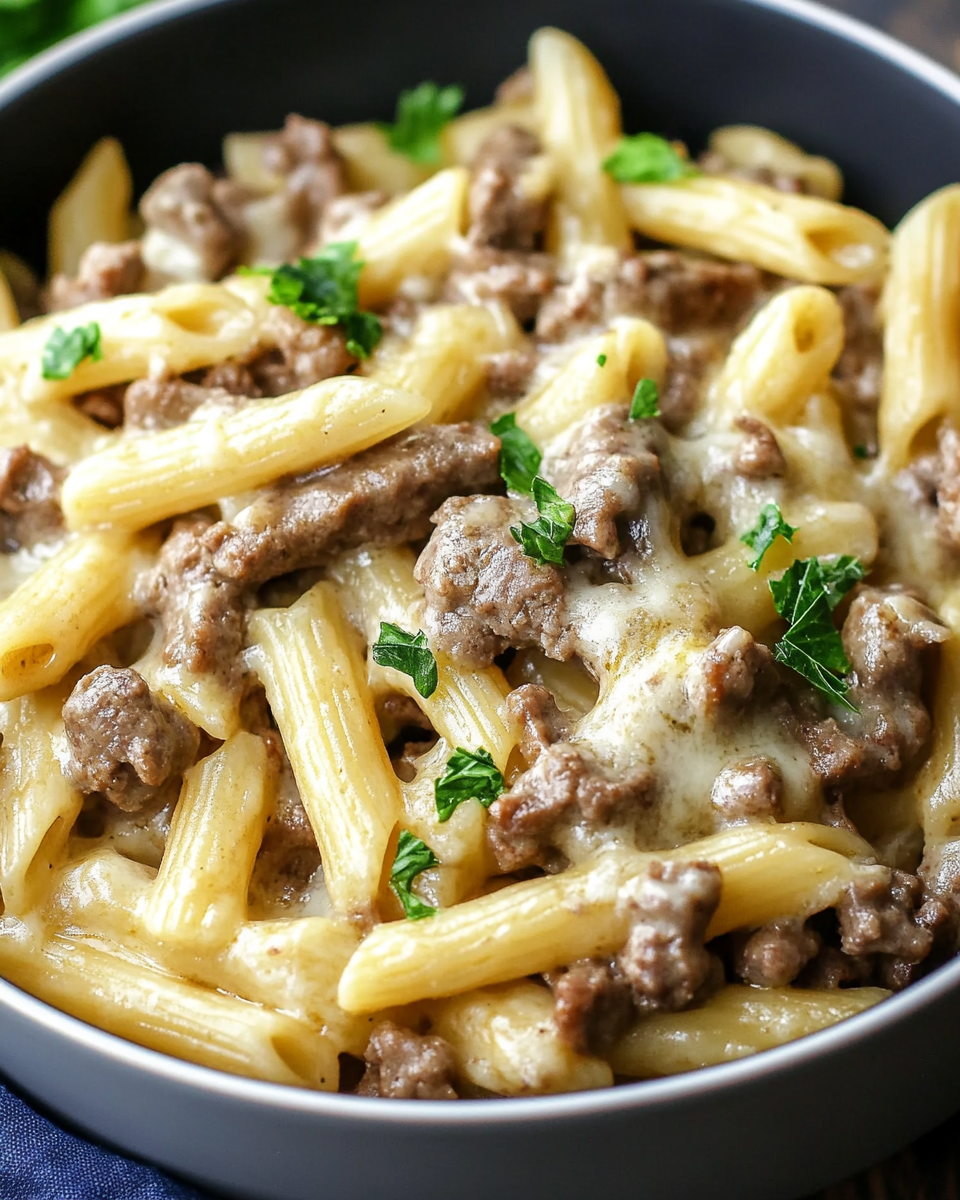
Perfect for weeknight dinners, meal prep, or a hearty family meal, this recipe offers a delicious twist on a beloved classic. It delivers all the indulgent flavors of a cheesesteak but in a more versatile, fork-friendly form.
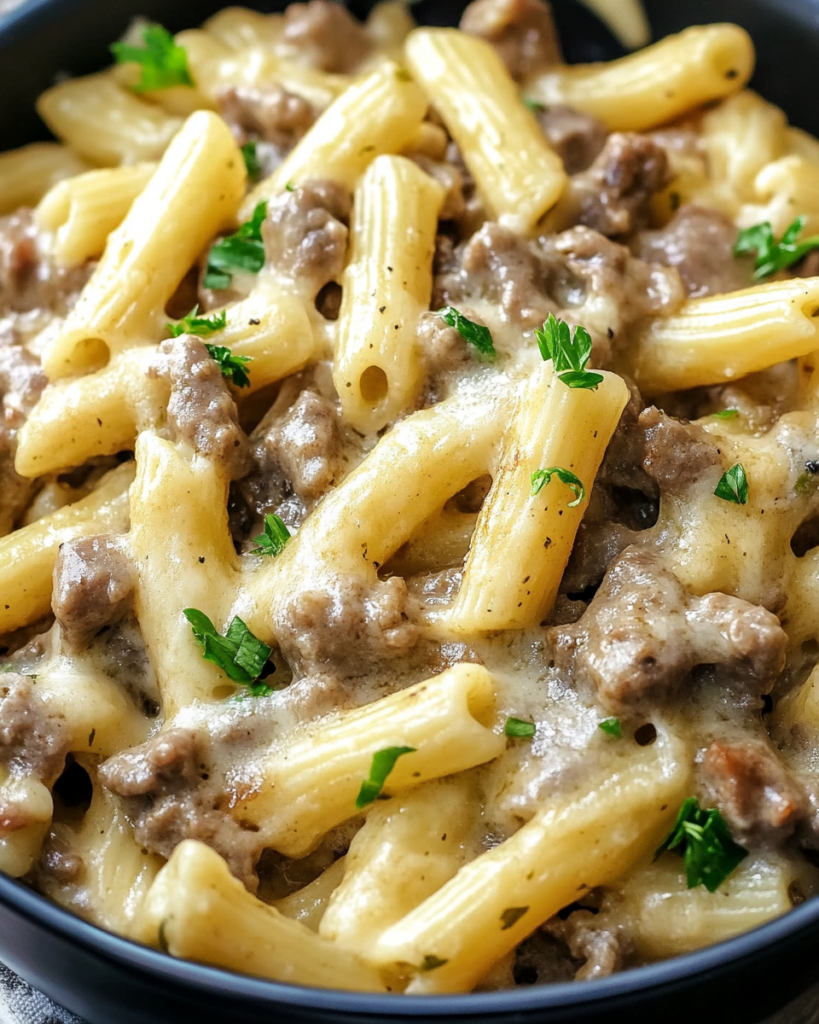
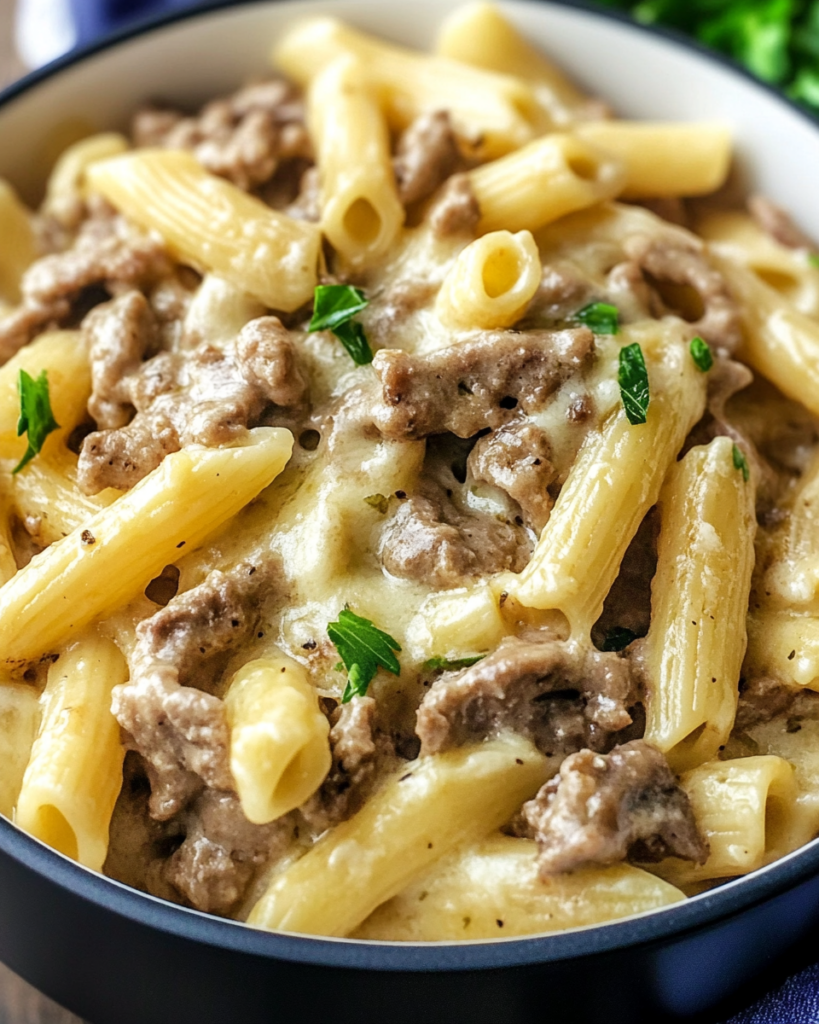
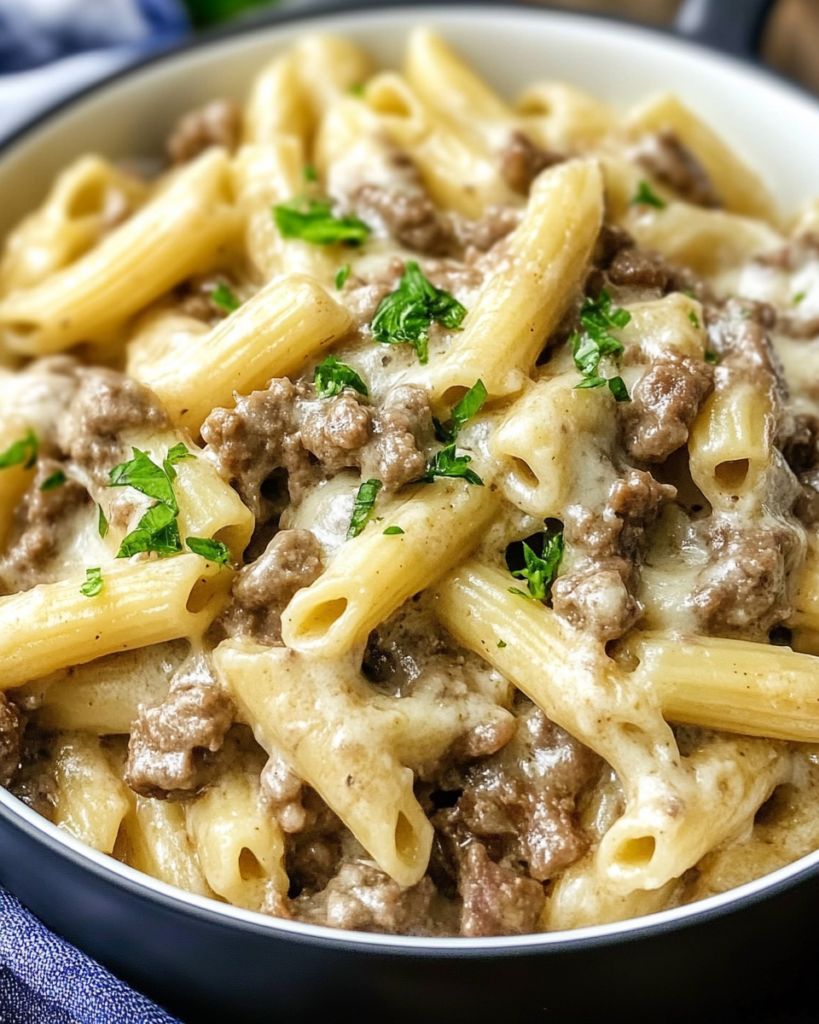
The combination of textures and flavors makes it irresistible. The pasta provides a satisfying bite, while the beef and vegetables add depth. The rich, creamy provolone sauce ties everything together, ensuring that each bite is packed with flavor. Whether you’re a fan of Philly Cheesesteaks or simply looking for a new pasta dish to try, this recipe will not disappoint.
Preparation Phase & Essential Tools
Before cooking, it’s important to have all ingredients prepped and tools ready to ensure a smooth process.
Essential Cooking Tools
- Large pot – For boiling the pasta.
- Deep skillet or sauté pan – To cook the beef, vegetables, and sauce.
- Colander – For draining the pasta.
- Whisk – Essential for making the smooth cheese sauce.
- Cutting board and knife – To chop vegetables efficiently.
Each tool plays a key role in streamlining the process and ensuring the best results. Using a deep skillet allows enough space for the beef and vegetables to cook evenly, while a whisk ensures the sauce achieves a creamy, lump-free consistency.
Preparation Tips
- Chop all vegetables in advance to make cooking easier.
- Use freshly shredded provolone for the best melt and flavor. Pre-packaged shredded cheese contains anti-caking agents that can make the sauce grainy.
- Cook pasta to al dente so it maintains texture when mixed with the sauce.
- Drain the beef properly to prevent excess grease from making the dish too oily.
Ingredients Breakdown
Main Ingredients
- 10 ounces rigatoni pasta – Holds the sauce well and provides a hearty texture.
- 1 pound ground beef – Adds a savory, meaty flavor. Ground beef makes the dish quicker to prepare than using steak slices.
- 1 teaspoon salt & 1 teaspoon black pepper – Enhances and balances flavors.
- 8 ounces fresh mushrooms, thinly sliced – Adds umami and depth to the dish.
- 1 large green bell pepper, finely chopped – A signature ingredient in a classic Philly Cheesesteak.
- 1 large onion, finely chopped – Provides sweetness and a rich aroma.
- 2 teaspoons minced garlic – Enhances the savory notes.
- ½ teaspoon red pepper flakes (optional) – Adds a touch of heat.
- 2 tablespoons unsalted butter & 2 tablespoons all-purpose flour – The base for the roux, which thickens the cheese sauce.
- 1 cup whole milk & 1 cup half-and-half – Creates a rich and creamy consistency.
- 1 cup provolone cheese, diced or shredded – The classic cheese used in a Philly Cheesesteak.
- 2 tablespoons fresh parsley, finely chopped – Adds freshness to the final dish.
Possible Substitutions
- Pasta alternatives – Penne, fusilli, or shells work well.
- Cheese substitutes – Mozzarella, Monterey Jack, or white American cheese.
- Protein variations – Use thinly sliced steak, ground turkey, or chicken for a different take.
- Gluten-free option – Swap regular pasta for gluten-free pasta and use cornstarch instead of flour.
Step-by-Step Cooking Instructions
1. Cook the Pasta
- Bring a large pot of salted water to a boil.
- Cook the rigatoni according to package instructions until al dente.
- Drain and set aside.
2. Cook the Beef
- Heat a large skillet over medium heat.
- Add the ground beef, season with salt and black pepper, and cook until browned and no pink remains.
- Remove the beef from the skillet and drain any excess grease.
3. Sauté the Vegetables
- In the same skillet, add the mushrooms, bell pepper, and onion.
- Cook over medium heat until softened and any excess moisture has evaporated.
- Stir in the minced garlic and cook for 30 seconds until fragrant.
- Remove from heat and set aside.
4. Make the Cheese Sauce
- In a separate skillet, melt the butter over medium heat.
- Sprinkle in the flour and whisk continuously for 1 minute to create a smooth roux.
- Slowly whisk in the milk and half-and-half, stirring frequently.
- Simmer for 4-6 minutes until thickened.
5. Combine the Ingredients
- Remove the sauce from heat and stir in the provolone cheese until fully melted and smooth.
- Add the cooked pasta and half of the beef and vegetable mixture, tossing to coat evenly.
6. Assemble and Serve
- Transfer the pasta to a serving dish.
- Top with the remaining beef and vegetable mixture.
- Garnish with freshly chopped parsley.
- Serve immediately.
Serving Suggestions
Philly Cheesesteak Pasta is a rich and creamy dish that shines on its own, but a few simple garnishes and presentation techniques can take it to the next level.
Best Ways to Serve This Dish
- Garnish with fresh parsley – A sprinkle of finely chopped parsley adds a pop of color and a touch of freshness.
- Extra cheese on top – Melt additional provolone or mozzarella under the broiler for a bubbly, golden layer.
- Add a drizzle of hot sauce – A dash of sriracha, buffalo sauce, or a few crushed red pepper flakes enhances the flavor.
- Serve in a warm bowl – Pasta stays hotter for longer when served in pre-warmed dishes.
Portion Sizes
For a standard meal, this recipe serves four people. If serving as part of a larger spread, it can stretch to six smaller portions. Pairing it with a fresh salad or vegetable-based side can balance the richness and make for a well-rounded meal.
Side Dish Recommendations
Pairing Philly Cheesesteak Pasta with the right sides can enhance its flavors while adding variety and texture to the meal. Lighter, crispier sides work well to contrast the creamy pasta.
1. Garlic Bread
A classic pairing for any pasta dish, garlic bread offers a crunchy texture and a buttery, garlicky flavor that complements the creamy sauce. It also works well for scooping up any extra cheese sauce left on the plate.
2. Caesar Salad
The crisp romaine lettuce, crunchy croutons, and tangy dressing provide a refreshing contrast to the richness of the pasta. A homemade or store-bought Caesar salad is a great way to add freshness.
3. Roasted Brussels Sprouts
Brussels sprouts caramelize beautifully when roasted, bringing out a nutty and slightly sweet flavor. A drizzle of balsamic glaze can enhance their taste while balancing the heaviness of the pasta.
4. Steamed Broccoli
For a simple and nutritious side, steamed broccoli adds a fresh element to the meal. Lightly seasoned with salt and a squeeze of lemon juice, it provides a mild, clean contrast to the creamy sauce.
5. Sautéed Green Beans
Cooked with a bit of olive oil and garlic, green beans add a nice crunch and slight bitterness that balances the cheesiness of the pasta.
6. Caprese Salad
A mix of fresh tomatoes, mozzarella, and basil drizzled with balsamic glaze can serve as a bright and refreshing side. The acidity from the tomatoes cuts through the richness of the pasta, creating a well-balanced bite.
7. Oven-Roasted Potatoes
For an extra indulgent meal, crispy roasted potatoes seasoned with garlic and herbs add a hearty, flavorful touch.
8. Pickled Vegetables
A small side of pickled cucumbers, carrots, or red onions can add a tangy, refreshing contrast that prevents the meal from feeling too heavy.
Common Mistakes and How to Avoid Them
Even though this dish is relatively easy to make, a few common mistakes can affect the final result. Paying attention to these details ensures a perfectly creamy and flavorful pasta every time.
1. Overcooking the Pasta
- Problem: Rigatoni that is overcooked will become too soft and lose its texture when mixed with the sauce.
- Solution: Cook the pasta al dente, following the package instructions and testing for doneness a minute before the recommended time.
2. Not Draining Ground Beef Properly
- Problem: Excess grease from the beef can make the dish overly oily.
- Solution: After browning the beef, drain the grease using a slotted spoon or by tilting the pan and blotting with a paper towel.
3. Skipping the Roux Step for the Cheese Sauce
- Problem: A cheese sauce without a proper roux may turn out runny and not coat the pasta well.
- Solution: Cook the flour and butter for at least a minute before adding the milk to create a stable base for the sauce.
4. Adding Cheese Too Quickly
- Problem: If provolone is added to a very hot sauce, it can clump instead of melting smoothly.
- Solution: Remove the pan from heat before stirring in the cheese, allowing it to melt gradually.
5. Underseasoning the Dish
- Problem: Not seasoning each component properly can lead to a bland final dish.
- Solution: Season the beef, vegetables, and sauce separately, tasting as you go. A pinch of salt in the cheese sauce can enhance the overall flavor.
6. Using Pre-Shredded Cheese
- Problem: Pre-packaged shredded cheese contains anti-caking agents that prevent it from melting smoothly.
- Solution: Use freshly grated provolone for a silkier, more even texture in the sauce.
7. Overloading the Dish with Vegetables
- Problem: Adding too many mushrooms, onions, or peppers can introduce excess moisture, making the sauce watery.
- Solution: Sauté vegetables until most of their moisture is released before mixing them into the dish.
8. Reheating Incorrectly
- Problem: Leftover Philly Cheesesteak Pasta can dry out when reheated improperly.
- Solution: When reheating, add a splash of milk or broth and stir frequently to restore creaminess. Stovetop reheating is preferable to microwaving.
Expert Recipe Tips
A few small adjustments can make a big difference in achieving the best Philly Cheesesteak Pasta. From ingredient choices to cooking techniques, these tips will ensure a smooth, creamy, and flavorful dish every time.
1. Use the Right Cheese for a Smooth Sauce
- Provolone is the traditional choice, but if a smoother texture is preferred, try blending it with mozzarella or white American cheese.
- Avoid using pre-shredded cheese, as it contains anti-caking agents that can lead to a grainy sauce.
2. Adjust the Spice Level to Taste
- Red pepper flakes add a mild heat, but for extra spice, a dash of hot sauce or sliced jalapeños can be incorporated.
- If serving to children or those sensitive to spice, omit the red pepper flakes entirely.
3. Cook the Pasta Just Right
- Overcooked pasta will become too soft when mixed with the sauce. Cook it al dente so it maintains its texture.
- Rinsing pasta is not recommended, as the starch helps the sauce adhere better.
4. Enhance the Flavor with a Touch of Worcestershire Sauce
- A small amount (about a teaspoon) of Worcestershire sauce adds depth and richness to the beef.
- This is an optional step but enhances the savory notes of the dish.
5. Turn It into a Baked Pasta Dish
- Transfer the cooked pasta mixture into a baking dish, sprinkle additional provolone or mozzarella on top, and bake at 375°F for 10-15 minutes.
- Broiling for a few extra minutes will create a golden, bubbly cheese crust.
Storage and Reheating Instructions
How to Store Leftovers
Proper storage ensures that Philly Cheesesteak Pasta retains its flavor and texture.
- Refrigerator: Store in an airtight container for up to four days.
- Freezer: This dish can be frozen for up to two months. Store in freezer-safe containers, leaving space for expansion.
Best Methods for Reheating
Pasta dishes can become dry when reheated, but using the right technique helps restore the creamy texture.
- Stovetop: Add a splash of milk or broth and reheat over medium heat, stirring frequently.
- Microwave: Heat in short intervals, stirring between each round, and add a little liquid if needed.
- Oven: Bake at 350°F, covered with foil, for 15-20 minutes to prevent drying out.
Avoid overheating, as it can cause the cheese to separate and become oily.
Frequently Asked Questions (FAQs)
1. Can I Use Steak Instead of Ground Beef?
Yes, thinly sliced ribeye or sirloin works well in this recipe. Cook the steak quickly over high heat to prevent toughness and slice it thinly before mixing it with the pasta.
2. What’s the Best Cheese Substitute for Provolone?
Mozzarella, Monterey Jack, or white American cheese can be used as alternatives. Each provides a slightly different texture and flavor.
3. Can I Make This Pasta Ahead of Time?
Yes, but for the best results, store the sauce separately from the pasta and mix them together when reheating. This prevents the pasta from absorbing too much liquid.
4. How Do I Make This Dish Gluten-Free?
Use gluten-free pasta and replace the flour in the sauce with a cornstarch slurry (mixing cornstarch with a small amount of water before adding it to the sauce).
5. What’s the Best Way to Prevent the Cheese Sauce from Clumping?
Remove the pan from heat before adding the cheese. Stir in the cheese gradually, ensuring it melts smoothly. Using freshly shredded cheese also helps.
6. Can I Make This a One-Pot Meal?
Yes, by cooking the pasta in broth and then adding the remaining ingredients directly into the same pot, cleanup can be minimized while still achieving great flavor.
7. Can I Use a Slow Cooker?
Yes, but cook the pasta separately and stir it in before serving. The slow cooker is best for keeping the dish warm rather than cooking it from start to finish.
8. What Protein Options Work Instead of Beef?
Ground turkey, chicken, or plant-based meat alternatives can be used for a different take on this dish while keeping the same flavors.
Conclusion
Philly Cheesesteak Pasta brings together the best elements of a classic cheesesteak sandwich in a creamy, satisfying pasta dish. The combination of seasoned ground beef, sautéed onions and peppers, and a rich provolone cheese sauce creates a meal that is both hearty and comforting.
This dish is perfect for busy weeknights, family dinners, or even meal prep, as it stores and reheats well. With the ability to customize the ingredients, adjust the spice level, and modify for dietary preferences, it is a versatile recipe that can fit many different tastes.
Whether served with a simple side salad, crispy garlic bread, or roasted vegetables, this pasta is sure to become a favorite. By following the tips for preparation, storage, and reheating, it will maintain its rich, creamy texture and bold flavors every time.
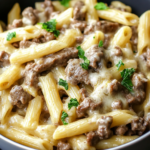
Philly Cheesesteak Pasta
Ingredients
- 10 ounces rigatoni pasta
- 1 pound ground beef
- 1 teaspoon salt
- 1 teaspoon ground black pepper
- 8 ounces fresh mushrooms thinly sliced
- 1 large green bell pepper finely chopped
- 1 large onion finely chopped
- 2 teaspoons minced garlic
- ½ teaspoon red pepper flakes optional
- 2 tablespoons unsalted butter
- 2 tablespoons all-purpose flour
- 1 cup whole milk
- 1 cup half-and-half
- 1 cup provolone cheese diced or shredded
- 2 tablespoons fresh parsley finely chopped
Instructions
Cook the Pasta:
- Bring a large pot of salted water to a boil.
- Cook the rigatoni according to package instructions until al dente.
- Drain and set aside.
Cook the Beef:
- Heat a large skillet over medium heat.
- Add the ground beef, season with salt and pepper, and cook until browned and no pink remains.
- Remove the beef from the skillet and set aside.
Sauté the Vegetables:
- In the same skillet, add the mushrooms, bell pepper, and onion.
- Cook over medium heat until softened and the moisture has evaporated.
- Stir in the minced garlic and cook for 30 seconds until fragrant.
- Remove from heat and set aside.
Make the Cheese Sauce:
- In a separate skillet, melt the butter over medium heat.
- Sprinkle in the flour and whisk continuously for 1 minute to form a smooth roux.
- Slowly whisk in the milk and half-and-half, stirring frequently.
- Simmer for 4-6 minutes, or until thickened.
Combine the Ingredients:
- Remove the sauce from heat and stir in the provolone cheese until melted and smooth.
- Add the cooked pasta and half of the beef and vegetable mixture, tossing to coat evenly.
Assemble and Serve:
- Transfer the pasta to a serving dish.
- Top with the remaining beef and vegetable mixture.
- Garnish with freshly chopped parsley.
- Serve immediately and enjoy!