Thai Coconut Curry Chicken Soup (Dairy Free) is the ultimate one-pot comfort meal. It brings together the richness of creamy coconut milk, the bold heat of red curry paste, and the brightness of lime juice for a truly soul-satisfying dish. This soup is layered with tender chicken, crisp-tender vegetables, and fresh herbs. It’s naturally dairy-free, gluten-free, Whole30, and paleo-compliant, making it suitable for a variety of dietary preferences.
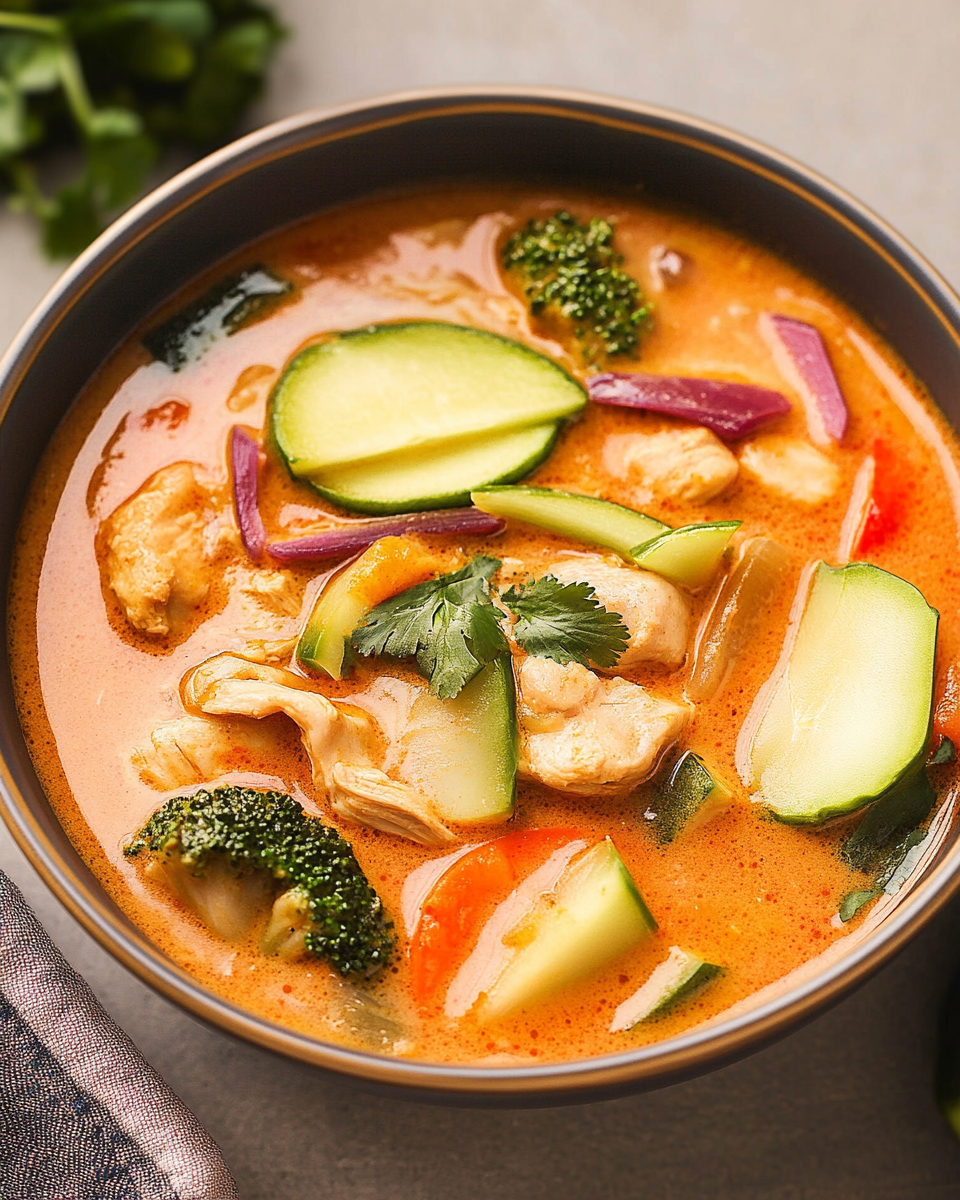
Inspired by traditional Thai cuisine, this recipe is a fusion of flavor and nourishment. Whether you’re fighting off a cold, craving something warm and spicy, or simply in need of a quick but nourishing meal, this dish delivers.
Why You’ll Love This Recipe
There are countless reasons to keep this Thai Coconut Curry Chicken Soup (Dairy Free) on your weekly rotation:
- One-pot meal: Minimal cleanup, maximum flavor.
- Nutrient-packed: Loaded with fresh vegetables and lean protein.
- Dairy-free and gluten-free: Perfect for restricted diets.
- Meal prep-friendly: Stores well and tastes even better the next day.
- Customizable: Adjust spice level, switch veggies, or swap proteins.
This soup isn’t just delicious—it’s designed to be adaptable, healthy, and deeply satisfying.
When to Make It
This coconut curry chicken soup is ideal for:
- Cold-weather dinners
- Post-holiday detox meals
- Weeknight meals on busy schedules
- Immune-boosting comfort food
Pair it with jasmine rice or cauliflower rice for a more filling bowl, or enjoy it on its own as a low-carb, high-protein meal.
Preparation Phase & Tools to Use
Essential Tools and Equipment
To make Thai Coconut Curry Chicken Soup (Dairy Free) efficiently, have the following tools ready:
- Large soup pot or Dutch oven – Holds all ingredients and promotes even cooking.
- Sharp chef’s knife – For slicing vegetables and chicken quickly and cleanly.
- Cutting board – Preferably non-slip and easy to clean.
- Measuring cups and spoons – For precise ingredient portions.
- Ladle – To serve soup neatly and evenly.
- Citrus juicer – Helps extract every drop of lime juice.
Why These Tools Matter
Using a large, heavy-bottomed pot ensures even heat distribution, preventing ingredients from sticking or burning. A sharp knife makes prep smoother, especially when handling chicken or firm vegetables like carrots. Measuring tools maintain the right flavor balance, especially when working with potent ingredients like curry paste or lime juice.
Preparation Tips
- Chop all vegetables and chicken before turning on the heat. Mise en place makes everything faster and smoother.
- Use full-fat coconut milk for the creamiest, most satisfying result.
- Let the curry paste bloom in oil to deepen its flavor before adding liquids.
- Adjust salt and lime juice at the end. The final seasoning depends on your broth and personal taste.
- Don’t overcrowd the soup with too many veggies. Stick to a few bold, colorful ones that complement the curry base.
Ingredients List
Here’s everything you need for this recipe, organized by category:
Aromatics & Base
- 2 tablespoons avocado oil or toasted sesame oil
- 1/2 medium onion, thinly sliced or chopped
- 3 cloves garlic, chopped
- 1 teaspoon fresh ginger, grated or finely chopped
- 1/4 cup red curry paste (or green curry paste for a twist)
Vegetables
- 1 red bell pepper, thinly sliced
- 2 carrots, thinly sliced
- 1 medium zucchini, halved lengthwise and sliced
- 2 cups broccoli florets
Liquids & Protein
- 4 cups chicken broth (low sodium preferred)
- 1 (13.5 oz) can full-fat coconut milk
- 3 tablespoons coconut aminos
- 1 pound chicken breast, cut into bite-sized pieces
Seasoning & Finish
- 1 teaspoon salt, or to taste
- Juice of 1 lime
Garnish (Optional)
- Fresh cilantro or basil
- Red or green onions, thinly sliced
- Chili oil
- Chopped cashews
- Extra lime wedges
Step-by-Step Instructions
Follow these simple steps to bring your Thai Coconut Curry Chicken Soup (Dairy Free) to life:
- Sauté aromatics: Heat oil in a large pot over medium heat. Add onion, garlic, and ginger. Cook for about 2 minutes, until onions soften and garlic is fragrant.
- Bloom curry paste: Stir in red curry paste. Cook for 1 minute, stirring constantly.
- Add vegetables: Toss in bell pepper, carrots, and zucchini. Stir and cook for 3–4 minutes, until slightly softened.
- Add broth and coconut milk: Pour in chicken broth, coconut milk, and coconut aminos. Increase heat to medium-high. Bring to a simmer.
- Add chicken and broccoli: Stir in chicken and broccoli. Simmer for 5–6 minutes, or until chicken is fully cooked and broccoli is bright green and tender.
- Finish and season: Add lime juice and salt. Adjust seasoning to taste.
- Serve: Ladle into bowls. Top with herbs, onions, chili oil, and other garnishes as desired.
How to Serve Thai Coconut Curry Chicken Soup (Dairy Free)
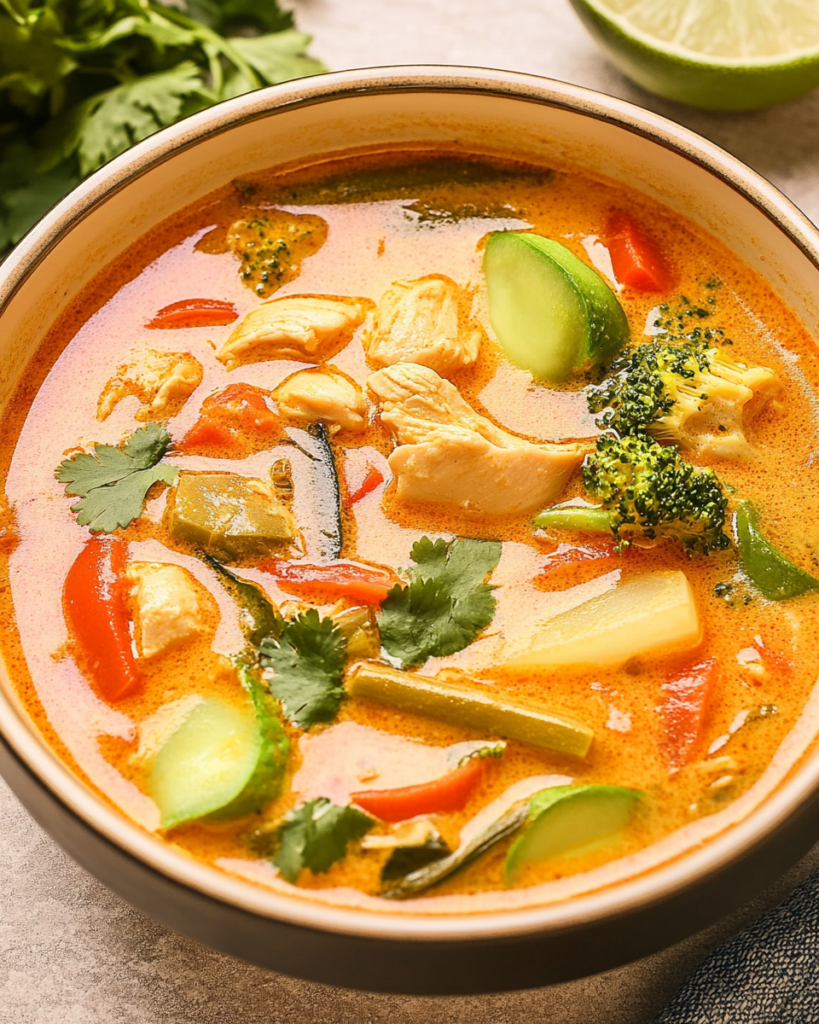
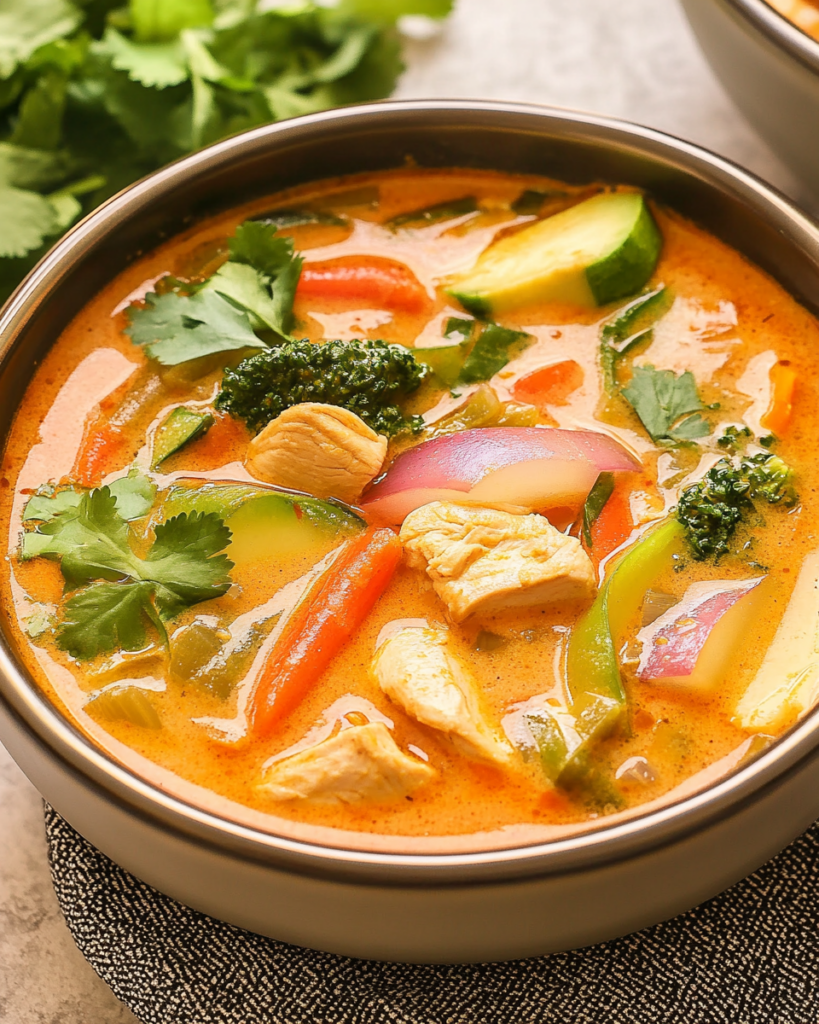
This Thai Coconut Curry Chicken Soup (Dairy Free) is versatile enough to suit any dining occasion. When serving, choose a deep bowl that showcases the vibrant colors and textures of the dish. Pour the soup carefully to maintain the integrity of the tender chicken and crisp vegetables. A final drizzle of chili oil or a sprinkle of chopped cashews adds a gourmet finish. For a well-rounded meal, consider serving the soup with a side that complements its bold flavors.
Serving Suggestions:
- Garnish Thoughtfully: Top your bowl with fresh cilantro or basil, thinly sliced red or green onions, and an extra wedge of lime. These garnishes not only enhance the presentation but also add a burst of fresh flavor.
- Accompaniments: Pair the soup with steamed jasmine rice or coconut cauliflower rice to create a balanced and satisfying meal.
- Bowl and Utensils: Use a wide, shallow bowl to allow for even distribution of ingredients and ensure every spoonful has a bit of each component.
- Temperature: Serve the soup piping hot to preserve its aromatic spices and to ensure a warming dining experience.
Common Mistakes to Avoid & How to Perfect the Recipe
When preparing Thai Coconut Curry Chicken Soup (Dairy Free), even small missteps can affect the final flavor and texture. The following tips will help you avoid common pitfalls and produce a consistently delicious dish.
Common Mistakes:
- Overcooking the Chicken: Cooking the chicken for too long can result in dry, tough meat. Always add the chicken towards the end of the cooking process, allowing just enough time for it to cook through while remaining tender.
- Skipping the Blooming Step: The process of blooming the curry paste in oil is critical. Neglecting this step may result in a less flavorful dish, as the paste needs time to release its full potential.
- Under-seasoning: The balance of salt and lime juice is essential. Taste your soup before serving and adjust the seasoning as needed. Too little salt or lime can make the dish bland, while too much can overpower the delicate balance.
- Overcrowding the Pot: Overloading the pot with too many vegetables can dilute the flavors. Stick to the recommended quantities to maintain a strong, concentrated taste.
- Incorrect Oil Temperature: Starting with oil that is too cold or too hot may affect the sautéing of aromatics. Heat the oil to a moderate temperature so that onions, garlic, and ginger become fragrant and soft without burning.
Tips for Perfection:
- Use Fresh Ingredients: Fresh garlic, ginger, and vegetables yield the best flavor. Prepping all ingredients before cooking ensures a smooth process.
- Monitor the Simmer: Maintain a gentle simmer once you add the liquids. A rolling boil can break down the vegetables too quickly, leading to a mushy texture.
- Adjust for Personal Taste: Don’t hesitate to tweak the spice level. If you prefer a milder soup, reduce the amount of curry paste; if you like it spicy, consider adding a pinch of crushed red pepper.
- Timing is Key: Follow the recipe timings closely. Over-simmering can lead to overcooked chicken and vegetables, while under-simmering might leave the soup underdeveloped.
- Balance the Flavors: Always check the balance between the creaminess of the coconut milk, the heat from the curry paste, and the acidity from the lime juice. This balance is what makes the soup unique and refreshing.
Side Dish Recommendations
Pairing the right sides with Thai Coconut Curry Chicken Soup (Dairy Free) can elevate your meal to a restaurant-quality experience. Below are eight delicious side dish recommendations that complement the soup perfectly:
- Jasmine Rice: Its aromatic fragrance and fluffy texture make it an excellent base for absorbing the flavorful broth.
- Coconut Cauliflower Rice: A low-carb alternative that carries the tropical notes of the soup.
- Thai Spring Rolls: Fresh vegetables wrapped in rice paper, served with a light dipping sauce, add crunch and a burst of flavor.
- Spicy Cucumber Salad: This cool, tangy salad offers a crisp contrast to the warm, creamy soup.
- Mango Sticky Rice (for a dessert option): A classic Thai treat that complements the spicy and savory flavors of the soup.
- Thai Peanut Slaw: Crunchy vegetables tossed in a tangy peanut dressing create a refreshing side.
- Grilled Lemongrass Shrimp Skewers: The herbal notes of lemongrass pair well with the coconut and curry elements in the soup.
- Vegan Thai Rice Paper Rolls: Filled with fresh vegetables and herbs, these rolls are light and refreshing, perfect for a balanced meal.
These side dishes provide texture and flavor contrast while keeping in line with the overall Thai and dairy-free theme of the meal.
Recipe Tips and Customization Ideas
This Thai Coconut Curry Chicken Soup (Dairy Free) is already a flavorful, well-balanced meal, but there are several ways to make it your own. Whether you’re adjusting for dietary preferences or just exploring new variations, these ideas will help you get creative without losing the integrity of the dish.
Flavor Enhancements
- Add Thai basil: Stir in fresh Thai basil leaves at the end for a more authentic, herbal note.
- Boost umami: A splash of fish sauce or a pinch of mushroom powder can deepen the broth’s savory flavor, though these may affect Whole30 compliance.
- Use homemade broth: For a richer taste, use homemade chicken bone broth or a deeply flavored stock.
Ingredient Swaps
- Protein alternatives: Swap chicken for tofu, shrimp, or chickpeas if you’re looking for a vegetarian or pescatarian version.
- Curry paste variations: Red curry paste is classic, but green or yellow curry pastes provide a different flavor profile and are equally delicious.
- Low-carb option: For a keto-friendly bowl, reduce the carrots and serve the soup over cauliflower rice or shirataki noodles.
Make It a Meal
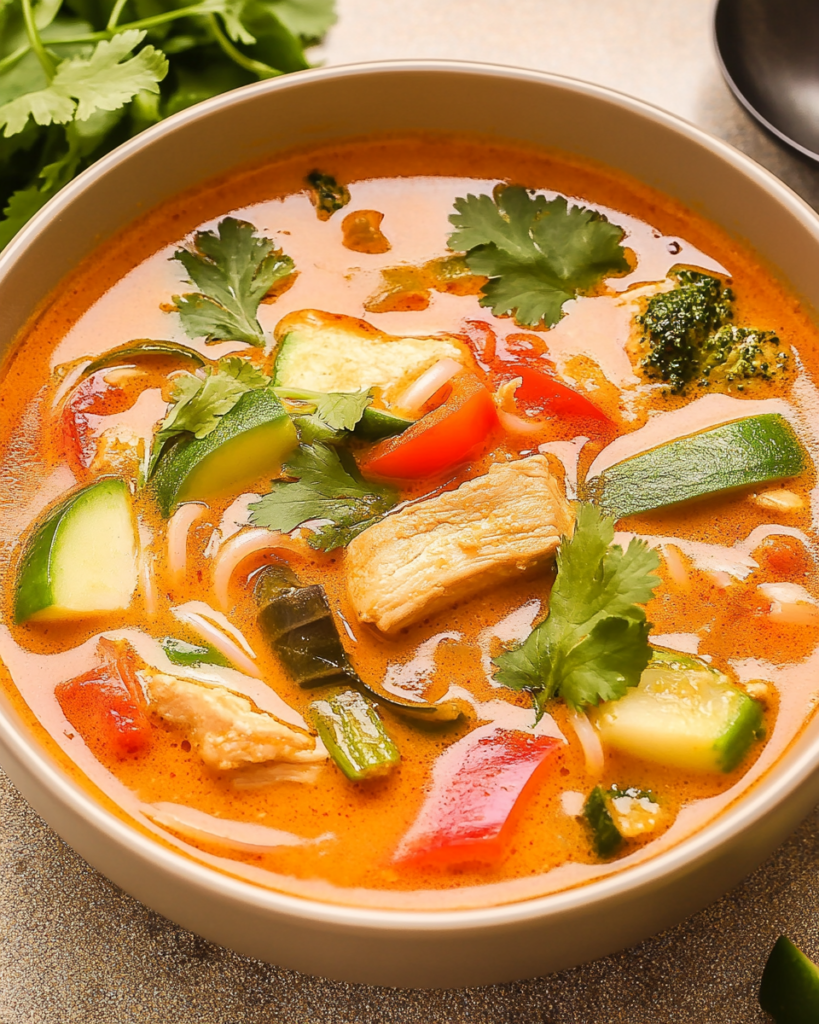
- Add rice noodles: Turn this into a heartier noodle soup by adding cooked rice noodles just before serving.
- Include leafy greens: Toss in spinach or kale in the final minutes for extra nutrition and texture.
- Increase the spice: Add a pinch of crushed red pepper flakes or a spoonful of sambal oelek to dial up the heat.
These adjustments allow you to tailor the soup to your tastes while still keeping it true to its Thai-inspired roots.
Storage and Reheating Instructions
Thai Coconut Curry Chicken Soup (Dairy Free) stores and reheats well, making it an excellent option for meal prep or leftovers.
Storing the Soup
- Refrigeration: Store the soup in an airtight container in the refrigerator for up to 5 days. Allow it to cool completely before sealing the container to preserve freshness.
- Freezing: This soup freezes well because it contains no dairy. Freeze in individual portions for up to 3 months. Use freezer-safe containers or heavy-duty zip-top bags.
Reheating Tips
- Stovetop: Warm the soup over medium heat, stirring occasionally. Add a splash of broth or water if the soup has thickened during storage.
- Microwave: Reheat in a microwave-safe bowl in 60-second intervals, stirring between each round to ensure even heating.
To maintain the best texture, avoid overcooking the vegetables during reheating. If you’re using frozen portions, thaw in the refrigerator overnight for optimal results.
Frequently Asked Questions (FAQs)
Is Thai Coconut Curry Chicken Soup healthy?
Yes. This soup is full of whole ingredients like lean protein, fiber-rich vegetables, and anti-inflammatory spices such as ginger and garlic. It’s naturally dairy-free and gluten-free, and can be made Whole30 or paleo depending on the ingredients you use.
Can I make this soup vegetarian or vegan?
Absolutely. Replace the chicken with tofu, tempeh, or canned chickpeas. Make sure your curry paste and broth are both vegan-friendly.
Is this soup Whole30-compliant?
Yes, as long as you use Whole30-approved curry paste and coconut aminos, and skip any added sweeteners or non-compliant broth.
What does Thai coconut curry soup taste like?
It has a rich, creamy broth with a balance of spice, sweetness, and acidity. The coconut milk adds smoothness, the curry paste delivers heat and depth, and the lime juice brightens the whole dish.
How do I adjust the spice level?
To reduce the heat, use less curry paste or choose a mild variety. To increase the spice, add more curry paste or include chili garlic sauce or Thai bird’s eye chilies.
Can I use leftover rotisserie chicken?
Yes, pre-cooked rotisserie chicken is a convenient option. Just add it toward the end of the cooking process to heat through without drying it out.
What’s the best coconut milk to use?
Full-fat canned coconut milk provides the richest, creamiest base. Avoid using coconut milk from cartons, which is typically diluted and less flavorful.
Conclusion
Thai Coconut Curry Chicken Soup (Dairy Free) is more than just a warming bowl of soup—it’s a comforting, flavorful experience that’s easy to prepare and nourishing to eat. Its adaptability means it can suit many diets and taste preferences without compromising on flavor. Whether you’re cooking for one, feeding a family, or prepping for the week ahead, this soup delivers on convenience, nutrition, and taste.
Use this recipe as a base to explore your creativity in the kitchen. Add your favorite vegetables, adjust the spice, or pair it with complementary sides. Every bowl can be a little different, but each one will be just as satisfying.
For more Whole30 and dairy-free recipes, check out our clean eating soup collection or explore our Asian-inspired dinner ideas. Looking to understand more about the health benefits of coconut milk? Visit Healthline’s guide to coconut milk.
Thai Coconut Curry Chicken Soup (Dairy Free)
Ingredients
- 2 tablespoons avocado oil or toasted sesame oil
- 1/2 medium onion thinly sliced or chopped
- 3 cloves garlic chopped
- 1 teaspoon fresh ginger grated or finely chopped
- 1/4 cup red curry paste or green curry paste
- 1 red bell pepper thinly sliced
- 2 carrots thinly sliced
- 1 medium zucchini halved lengthwise and sliced
- 4 cups chicken broth low sodium preferred
- 1 13.5 oz can full-fat coconut milk
- 3 tablespoons coconut aminos
- 1 pound chicken breast cut into bite-sized pieces
- 2 cups broccoli florets
- 1 teaspoon salt or to taste
- Juice of 1 lime
For Garnish (optional):
- Fresh cilantro or basil
- Red or green onions thinly sliced
- Chili oil
- Chopped cashews
- Extra lime wedges
Instructions
- Sauté aromatics: In a large soup pot, heat oil over medium heat. Add the onion, garlic, and ginger. Cook for about 2 minutes, stirring, until onions soften and garlic is fragrant.
- Add curry paste: Stir in the curry paste and cook for 1 minute, allowing it to bloom and coat the aromatics.
- Cook the veggies: Add bell pepper, carrots, and zucchini. Stir to coat in curry mixture and sauté for 3–4 minutes, until slightly softened.
- Add liquids: Pour in the chicken broth, coconut milk, and coconut aminos. Increase heat to medium-high and bring to a gentle simmer.
- Add chicken and broccoli: Stir in the chicken breast and broccoli florets. Simmer for 5–6 minutes, or until chicken is fully cooked and broccoli is bright green and tender.
- Season and finish: Stir in lime juice and salt to taste. Adjust seasoning as needed.
- Serve: Ladle into bowls and garnish with fresh herbs, onions, chili oil, cashews, and lime wedges as desired.